Ancient Earthwork Reveals How Neolithic Societies Were Innovation Hubs Long Before Civilization Took Shape
The Unexpected Depths of Neolithic Innovation Revealed Through a Surprising Earthwork
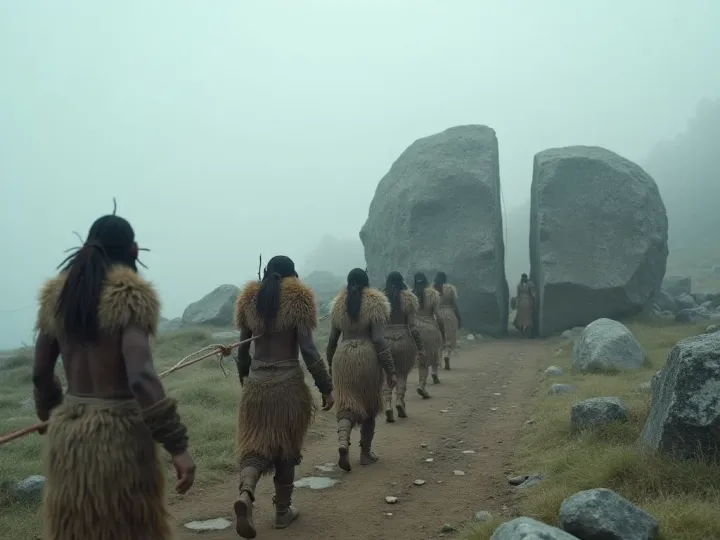
In a scene straight out of a prehistoric drama, archaeologists recently uncovered a rectangular earthwork nearly six millennia old along a quiet coastal landscape. What makes this discovery truly astonishing is not just its age, but what it implies about the societies that built it. For decades, the common narrative has depicted Neolithic communities as simple agrarian groups focused primarily on farming and survival. However, this newly unearthed monument challenges that view, suggesting their societal structures were more sophisticated, capable of organizing large-scale ceremonial projects that involved coordinated effort and social cohesion. The earthwork's precise construction hints at a collective cultural identity, an early form of societal organization that prioritized communal rituals and possibly even local governance, well ahead of what conventional history would suggest.
Why We Need to Rethink the Origins of Societal Complexity in the Neolithic Era
This remarkable find pushes us to reconsider the simplistic view of the Neolithic period as a time of primitive farming practices and modest communal living. Instead, the evidence from this earthwork indicates a society that possessed the organizational capacity to undertake sophisticated constructions and possibly even hold communal gatherings that reinforced social bonds and shared spiritual beliefs. The internal features, such as postholes and subtle soil alterations, suggest that these early societies might have had leadership structures or ritual specialists managing complex ceremonies. This revelation syncs with similar discoveries in other regions, hinting at a broader pattern of societal evolution during this period. It prompts scholars and enthusiasts alike to delve into the idea that these ancient communities might have been the true architects of collective human ingenuity, laying foundational practices that would influence subsequent eras.
Hidden Layers of History and the Power of Scientific Dating Methods
One of the most surprising aspects of this discovery is the precise dating achieved through advanced scientific techniques. Using optically stimulated luminescence (OSL), scientists deciphered that this earthwork dates back to roughly 3800 BC, situating it squarely within the early Neolithic period. This method, which measures the last exposure of mineral grains to sunlight, has revolutionized archaeology by enabling researchers to date complex landscape features that are often eroded or faintly visible. Such technological breakthroughs are vital because they provide the chronological context needed to understand the societal developments of this era. Furthermore, the dating reveals that the monument remained part of the landscape for centuries, suggesting its significance was long-lasting—and perhaps even evolving—over generations, influencing cultural practices that echo across millennia.
What This Means for Our Understanding of Our Ancestors’ Minds
Perhaps the most compelling implication of this find is its challenge to the notion that early societies lacked the cognitive ability to conceive of and build complex ceremonial landscapes. The construction of a sizeable enclosure, likely for ritual purposes, indicates an abstract capacity for planning, symbolism, and social coordination that rivals later civilizations. This pushes back the timeline for human mental evolution, suggesting that the roots of our cultural and cognitive capacities run deeper into prehistory than previously believed. As scholars analyze the alignment, spatial organization, and artefacts associated with this site, the narrative of human progress becomes richer and more nuanced, recognizing that early communities possessed a level of ingenuity that laid the groundwork for all advanced societies to come.
The Broader Impact and Future Directions of Neolithic Research
This discovery doesn’t just rewrite part of history; it reshapes the entire narrative of human developmental milestones. It underscores the importance of ongoing archaeological research, especially utilizing modern techniques like OSL, GIS mapping, and microscopic soil analysis. More importantly, it highlights the need to view the Neolithic era as a complex, culturally rich epoch that set the stage for civilization. As we refine our methods and uncover more sites, the picture of early human innovation becomes more detailed and vibrant, influencing how we approach education, cultural preservation, and even our understanding of human psychology. This air of continuous discovery—mirrored in projects like the Taş Tepeler project—emphasizes the enduring importance of buildings, landscapes, and artifacts in shaping who we are today.