Çatalhöyük: A Deep Dive into the World's First Urban Settlement
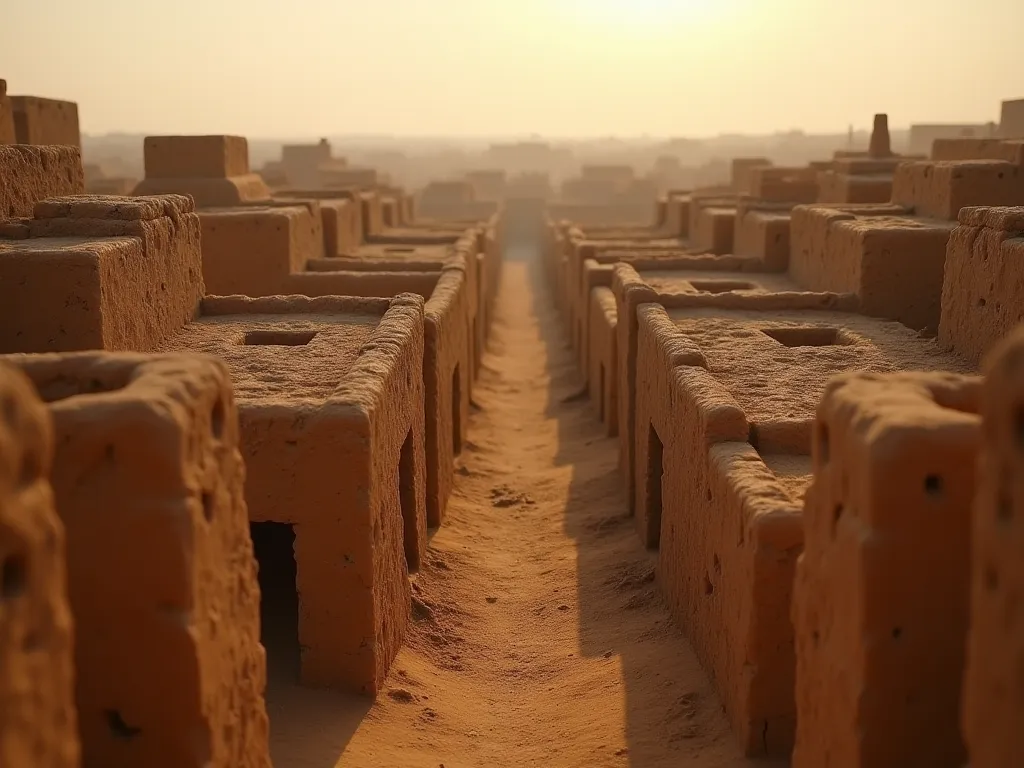
Çatalhöyük is a massive Neolithic settlement in Turkey, occupied from roughly 7100 BC. It features dense housing without public spaces or central planning, revealing a complex matrilineal society that challenges modern definitions of urbanization and social hierarchy.
Density Without Distinction
The Eastern Mound covers an area of about 12.5 hectares with a height of roughly 20 metres according to Wikipedia records. This scale dwarfs contemporary sites, presenting a population density that defies simple village classifications.
Archaeologists note the absence of public squares or main avenues. Instead, movement occurred via rooftops rather than ground-level streets, creating a vertical social network. Residents entered homes through holes in the ceiling, not front doors facing a street.
Contrasting Urban Models
Modern urban planning relies on zoned districts and centralized hubs for commerce or governance. Çatalhöyük rejected this blueprint entirely. The layout suggests a society where private domestic life took precedence over public civic identity.
This architectural choice implies sophisticated social cohesion without hierarchical authority figures. It challenges the conventional view that urbanization requires distinct political structures to manage complex populations.
The Matrilineal Evidence: Genetics Meets Artifacts
Genetic Roots of Social Order
Recent genetic studies published in Nature indicate that the social organization of Çatalhöyük began with a culture organized along matrilocality and matrilineality. This biological data aligns with the architectural layout, suggesting that family units were structured around female lineages rather than male dominance. The evidence points to a society where social capital flowed through maternal connections.
Archaeological artifacts reinforce this interpretation of gender dynamics. Excavations reveal differential treatment in the burial context, specifically regarding infant remains. Female infants received more grave goods than their male counterparts, indicating a higher perceived value or status within the community. This material disparity provides physical proof that social hierarchy was not uniform across genders.
Absence of Political Elites
The combination of matrilineal genetics and egalitarian burial practices explains the lack of elite housing or distinct political centers. Without a clear mechanism for accumulating wealth through male-dominated trade networks, no single group could establish permanent authority over others. This structure prevented the emergence of a ruling class that typically defines conventional urban settlements.
This social model challenges the assumption that complex cities require hierarchical governance to function. Instead, Çatalhöyük operated through cohesive kinship networks that distributed power evenly among households. The site demonstrates that sophisticated social management is possible without centralized political control.
Material Culture and Daily Life
Clay and Routine
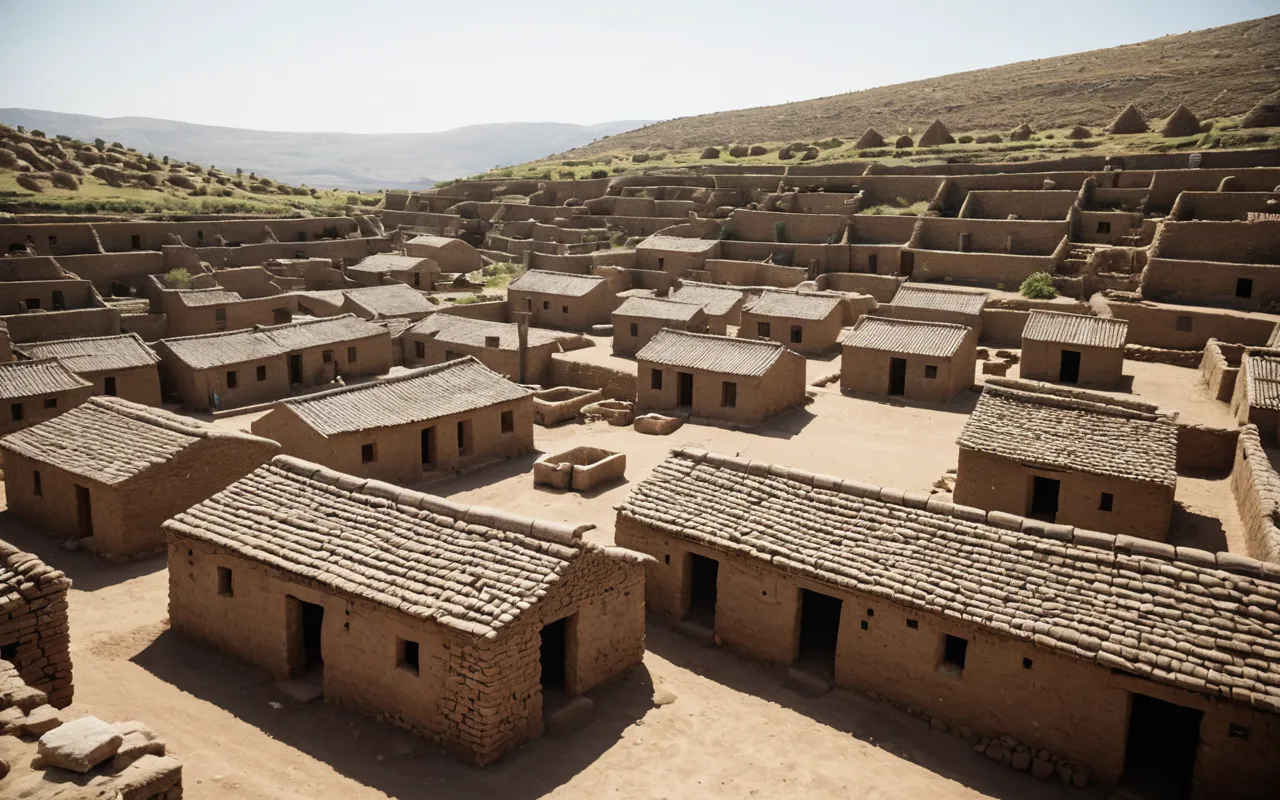
The excavation has uncovered a vast array of organic remnants that reveal the domestic rhythm of this settlement. Among these finds are more than 2,500 casually baked clay figurines scattered across residential floors. These objects include distinct human forms and a wider variety of animal representations that likely reflected the local ecosystem.
The term casually baked indicates these items were not subjected to high-temperature kiln firing or refined finishing processes. This low-intensity production method suggests they served immediate, functional purposes within household spaces rather than long-term ceremonial storage.
The lack of standardized firing techniques points toward a culture where artistic expression was integrated into daily labor rather than separated from it.
Curation and Storage
The physical location of these artifacts provides insight into modern archaeological practices. Recent excavations have transferred their collections to the Konya Archaeological Museum near the site itself.
In contrast, objects recovered during earlier campaigns are stored at the Museum of Anatolian Civilizations in Ankara. This geographic split highlights a shift from centralized national curation to local preservation efforts that prioritize regional context over metropolitan display.
The Evolution of the Mound: East vs. West
The site's history is split between two distinct geological formations that mark different eras of human activity. The Eastern Mound represents the primary Neolithic settlement, with construction beginning around 7100 BC Çatalhöyük. This early phase established the foundational social structures and architectural styles that define the location's global significance.
Occupation did not cease after this initial peak. A separate, later community developed on the Western Mound during the Early Chalcolithic period starting around 5600 BC. This chronological gap indicates a significant shift in local demographics and technological capabilities over several centuries.
Viewing these mounds as a single static entity obscures the dynamic nature of prehistoric urban development. The transition from Neolithic to Chalcolithic phases demonstrates that settlement patterns evolved through distinct cultural periods rather than remaining fixed. This diachronic perspective challenges simplistic models of ancient village life.
Preservation and Modern Interpretation
The site secured international recognition in July 2012 when it was designated as a UNESCO World Heritage Site under the official name "Neolithic Site of Çatalhöyük." This status, recorded with reference number 1405, rests on criteria iii and iv. These specific standards highlight the property's value as an outstanding example of human settlement and its role in illustrating significant stages in human history.
The formal designation functions as a rigorous framework for protecting the mound.
Scholarly leadership at the dig has shifted hands to reflect evolving research priorities. Continued excavations are now directed by Ali Ozan from Pamukkale University, marking a transition from previous long-term projects. This change in direction allows for fresh methodological approaches while maintaining continuity in data collection.
The shift in academic stewardship ensures that the interpretation of Çatalhöyük remains dynamic and responsive to new findings. It moves the site beyond a static historical curiosity into an active laboratory for understanding prehistoric social structures. This ongoing engagement is crucial for refining models of early urban complexity.
Community involvement forms a critical pillar of modern interpretation at Çatalhöyük. The education team runs workshops with nearly 1000 children and young adults from Konya and neighbouring towns each year. These sessions move beyond passive observation, engaging local youth in the practical aspects of archaeological inquiry.
By integrating local students into the research process, the project fosters a sense of ownership among residents. This strategy counteracts the common perception that heritage sites are foreign artifacts disconnected from contemporary life. It positions Çatalhöyük as a living part of the regional identity rather than an isolated museum piece.
These educational initiatives serve to bridge the gap between academic research and public understanding. They provide tangible evidence that prehistoric studies remain relevant to modern communities. The site thus operates as both a scientific resource and a cultural anchor for the surrounding region.
Why Çatalhöyük Matters for Understanding Society
Çatalhöyük dismantles the assumption that urban complexity requires a ruling elite or centralized bureaucracy. The site demonstrates that large-scale social coordination can emerge through horizontal networks rather than vertical command structures. This model challenges the traditional narrative where cities are born from the need for administrative control over trade and labor.
Recent discoveries further complicate the concept of a singular Neolithic Revolution as a linear progression toward modernity. Instead of a straightforward climb up an evolutionary ladder, the evidence points to diverse experiments in social organization. Some communities prioritized collective identity and ritual integration over individual status accumulation.
For researchers examining early human societies, this site serves as a crucial counter-narrative to state-centric theories of development. It proves that sophisticated social bonds can sustain large populations without the rigid hierarchies typical of later Bronze Age states. The physical layout and genetic markers reinforce the idea that equality was a functional strategy for survival in dense environments.
Understanding these alternative pathways helps contextualize modern debates about social cohesion and governance. By studying how prehistoric communities managed resource distribution without coercive power, scholars gain insights into the fundamental mechanics of human cooperation. This perspective remains essential for reevaluating the origins of complex societies.
Frequently Asked Questions
Who directed the long-term excavations at Çatalhöyük before recent leadership changes?
Ian Hodder directed the long-term excavations at Çatalhöyük until 2018. He led the research project for twenty-five years, establishing a comprehensive physical archive now accessible through Stanford Library Special Collections.
Is it possible for tourists to visit the excavation trenches at Çatalhöyük today?
Tourists can explore the South Area signage and excavations which provide an overview of the site. This area offers insights into the settlement across its 1500 years of occupation, allowing visitors to engage with the archaeological context.
What is the difference between the Eastern and Western Mounds in terms of age?
The Eastern Mound dates back to approximately 7100 BC during the Neolithic period. The Western Mound was occupied later, starting around 5600 BC in the Early Chalcolithic period, making it significantly younger than its eastern counterpart.
Are there any famous artworks or statues specifically associated with Çatalhöyük?
Over 2,500 casually baked Neolithic clay figurines have been discovered at the site. These include 187 human figures and mostly animal representations, providing significant insight into material culture and daily life.
For the full overview, see Neolithic revolution.
Related in this series: Gobekli Tepe history.