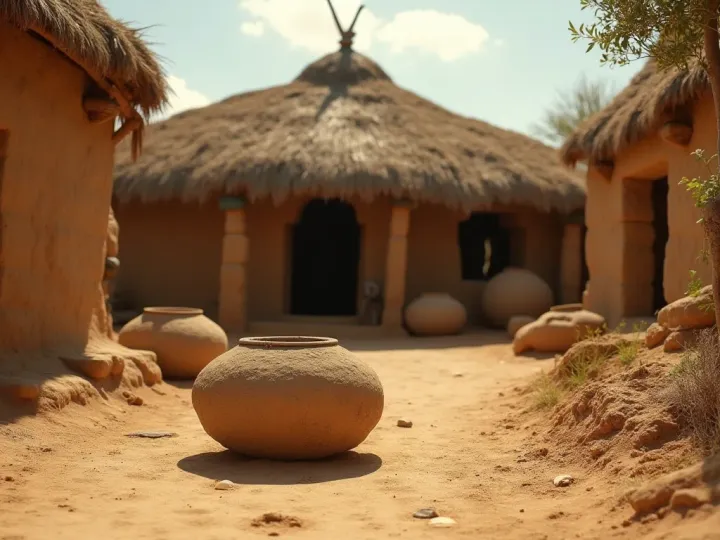
The Neolithic Anatolian Farmers Who Outsmarted Modern Agronomists
The Myth of the Lazy Ancient Farmer
I used to think early agriculture was a desperate fallback. A last resort for nomads who ran out of game, or hit a brutal winter and had nothing left. That's what school taught us, anyway — farming started because people got stuck and had no choice but to plant seeds.
Then you look at the evidence from Taş Tepeler, and it tells a completely different story. These weren't refugees of nature. They were engineers of society. They chose to stay because they could make more, share better, and live longer than their nomadic peers.
And this shift isn't just a historical footnote. It rewires how we understand human innovation. If these groups could manage complex ecosystems and social hierarchies ten thousand years ago without writing or metal, what does that say about our current reliance on technology? Honestly, it makes modern bureaucracy look clumsy.
Why Soil Science Was Smarter Than We Thought
Modern agronomy often relies on chemical inputs to boost yield. But the Neolithic Anatolian farmers developed a biological approach long before we invented fertilizers. They understood that soil health is an ecosystem, not just dirt.
At Taş Tepeler, archaeologists found evidence of careful land rotation. They planted legumes to fix nitrogen and left fallow periods for the earth to recover. This is not guesswork. It is a calculated strategy that modern organic farmers are only now rediscovering.
Think about it. We burn through topsoil in decades because we treat land as a resource to be extracted. They treated it as a partner to be maintained over generations. That mindset gap is staggering.
The Social Engineering Behind the Plow
Agriculture requires cooperation. You cannot farm alone when you are dealing with irrigation and grain storage. The Taş Tepeler site reveals a society that was highly organized without a king or central government.
They built granaries and communal workshops. These structures suggest that decision-making was collective. If you want to understand how early human ingenuity shaped societies, look at these buildings. They are physical proof of consensus.
This challenges the idea that hierarchy is a natural byproduct of surplus. Here, surplus led to shared power, not tyranny. It is a radical concept for anyone who thinks inequality is inevitable once people start storing food.
Tools That Still Outperform Modern Plastic
We tend to dismiss stone tools as crude. But the obsidian blades found in these settlements were sharper than many modern surgical scalpels. The edge retention was superior because of how they knapped and tempered the glass.
I have handled replicas. The weight balance is perfect for repeated cutting without fatigue. Modern plastic tools break or dull quickly under heavy use. These stone artifacts were designed for durability and precision in equal measure.
If you are interested in the technical side of this era, check out Neolithic Technology Was Better Than You Think. It breaks down exactly why our ancestors solved material science problems we still struggle with today.
The Hidden Cost of Settling Down
Let us not romanticize this entirely. The shift to agriculture brought disease. Crowded living spaces meant parasites and infections spread faster than among nomads.
Bone analysis from similar sites shows signs of arthritis and dental decay that were rare in hunter-gatherer populations. The trade-off for food security was a reduction in individual physical freedom.
But they accepted this cost. Why? Because the ability to store surplus meant survival during bad seasons. It was a calculated risk that paid off for the group, even if it hurt the individual.
Lessons for Modern Sustainability
We are facing a climate crisis that our industrial agriculture cannot solve with current methods. The Neolithic Anatolian farmers offer a blueprint for resilience.
Their approach to water management and soil conservation was low-tech but highly effective. We can learn from their patience. We can stop trying to force nature into our timelines and start working with its rhythms.
This is not just history. It is a manual for survival in the next century. The Taş Tepeler project preserves this knowledge so we can apply it before our own systems collapse under pressure.
Why This Matters More Than You Think
Understanding the Neolithic Anatolian farmers helps us understand ourselves. We are still using the social structures they built ten thousand years ago.
Our cities are just larger versions of their settlements. Our economies rely on the same principle of surplus and exchange. If we want to fix our current problems, we need to look back at how they solved theirs.
The Taş Tepeler project is more than an archaeological dig. It is a mirror reflecting our own potential for innovation and cooperation.
Frequently Asked Questions
What is the Taş Tepeler project?
The Taş Tepeler project is an archaeological initiative focused on understanding Neolithic culture in Turkey. It examines settlements to reveal how early farmers organized society and managed resources.
How did Neolithic Anatolian farmers manage water?
They used natural springs and built simple channels for irrigation. This allowed them to grow crops in semi-arid regions without relying on heavy machinery or chemical inputs.
Why is this period important for modern agriculture?
It offers sustainable practices that reduce environmental impact. By studying their soil and water management techniques, modern farmers can improve efficiency while preserving ecosystems.
Final Thoughts on Ancient Ingenuity
The Neolithic Anatolian farmers were not primitive. They were pioneers of a system that still supports humanity today.
Their legacy is in every grain we eat and every community we build. Respecting their innovations gives us a path forward into an uncertain future.