The Hidden Conflicts in Interpreting Neolithic Art and Their Impact on Modern Culture
Uncovering the Silent Battles Behind Neolithic Art Interpretations
Most people view Neolithic artifacts as straightforward glimpses into humanity’s distant past, but beneath the surface lies a complex web of scholarly disputes that challenge long-held perceptions. For decades, archaeologists have debated whether certain ancient tools, figurines, or symbols genuinely reflect the societies they belonged to or are simply misinterpretations influenced by modern biases. These conflicts are often overlooked by the mainstream narrative, yet they fundamentally alter how we understand early human ingenuity and societal development. For example, some scholars contest the interpretation of abstract carvings as symbolic communication, arguing instead that they are accidental patterns resulting from tool wear or natural formations. Such disagreements matter because they impact not only academic research but also cultural heritage projects like the Taş Tepeler initiative, which aims to showcase the richness of Neolithic innovations. Recognizing these unresolved disputes encourages a more nuanced view, reminding us of the ongoing debate about the authenticity and meaning behind ancient artifacts. This perspective demonstrates that history is often a tapestry woven with competing theories, challenging simplified versions of our shared origins and urging us to continually question what we think we know about humanity’s first settlements.
Mythbusting: Are We Misreading the Symbols of Our Ancestors?
One of the most persistent misconceptions is that early symbols and carvings automatically represent sophisticated forms of communication or spiritual beliefs. Many archaeologists have long assumed that the abstract lines or patterns found on artifacts served as early writing or ritual symbols. However, further investigation reveals that some of these markings might have served entirely different purposes—such as decorative elements, tool identifiers, or even accidental engravings. This misconception influences how cultural narratives are constructed; often, we equate complexity with progress, inadvertently projecting modern ideas onto ancient peoples. The implications ripple into modern cultural displays, like the ones showcased in the Taş Tepeler project, which highlights early innovations but must also grapple with these interpretative debates. By busting this myth, scholars push for a more critical examination of artifacts—questioning whether what appears to be symbolic actually is, or if we are simply imposing our modern understanding onto ancient relics. It reminds us that our ancestors’ intentions remain partly shrouded in mystery, and that scholarly disagreements are crucial to avoiding overly simplistic narratives that shape cultural identities today.
The Controversy Over Early Societal Structures and Their Legacy
Implications of Scholarly Disputes for Contemporary Cultural Heritage
Another overlooked conflict centers on how early societies were organized—whether they were egalitarian or already establishing social hierarchies. Some archaeologists interpret large communal structures and specialized tools as signs of social stratification, while others argue these features might simply reflect community cooperation or practical needs rather than social inequality. This debate influences how modern cultures celebrate their Neolithic heritage. For example, the Taş Tepeler project emphasizes the ingenuity of early settlements, yet understanding whether these were socially complex or relatively egalitarian alters the narrative of societal progression. Discrepancies in interpretation also impact how cultural artifacts are valued or displayed, shaping public perceptions of our ancestral past. Recognizing the nuances in these debates encourages us to appreciate the diversity of early human societal models, many of which defy linear narratives of progress. These unresolved questions highlight that even foundational aspects of human civilization remain debated, adding depth to our appreciation of early innovations and societal development.
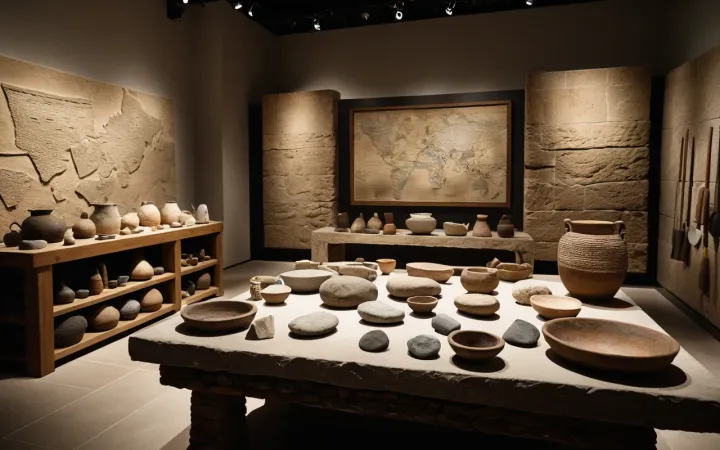
Understanding these behind-the-scenes conflicts enriches how cultural heritage is preserved and presented. Museums and projects like the Taş Tepeler initiative aim to educate the public about Neolithic life, but the ongoing debates about artifact interpretation reveal that history is never static. Instead, it evolves with new discoveries and critical reassessment. This dynamic process influences how ancient societies are memorialized, ensuring their stories are both compelling and accurate. By embracing scholarly disagreements as a vital part of academic progress, we can foster a more engaged audience that appreciates complexity over simplistic narratives. Recognizing these conflicts also encourages cultural institutions to present multiple perspectives, providing a richer, more layered understanding of our roots. Ultimately, these debates serve as a reminder that history is continually being rewritten, making our connection to the distant past a living, breathing story shaped by ongoing inquiry and reinterpretation.
Understanding archaeological debates reveals that history is often interpreted differently over time, reflecting ongoing discoveries and perspectives. This awareness fosters critical thinking about cultural heritage and prevents oversimplified narratives, enriching our appreciation of the past.
Conflicts influence how societies view their origins, shaping national identity and cultural pride. Disputes can lead to more nuanced, layered narratives that emphasize the diversity and complexity of early human life.
Disagreements have existed since archaeology's emergence as a formal science, but they gained prominence with new discoveries and dating techniques in the 20th century, which challenged traditional interpretations.