Why 9,000 Year Old Hunters Built Shrines To Their Traps
The Shrine That Defies Logic
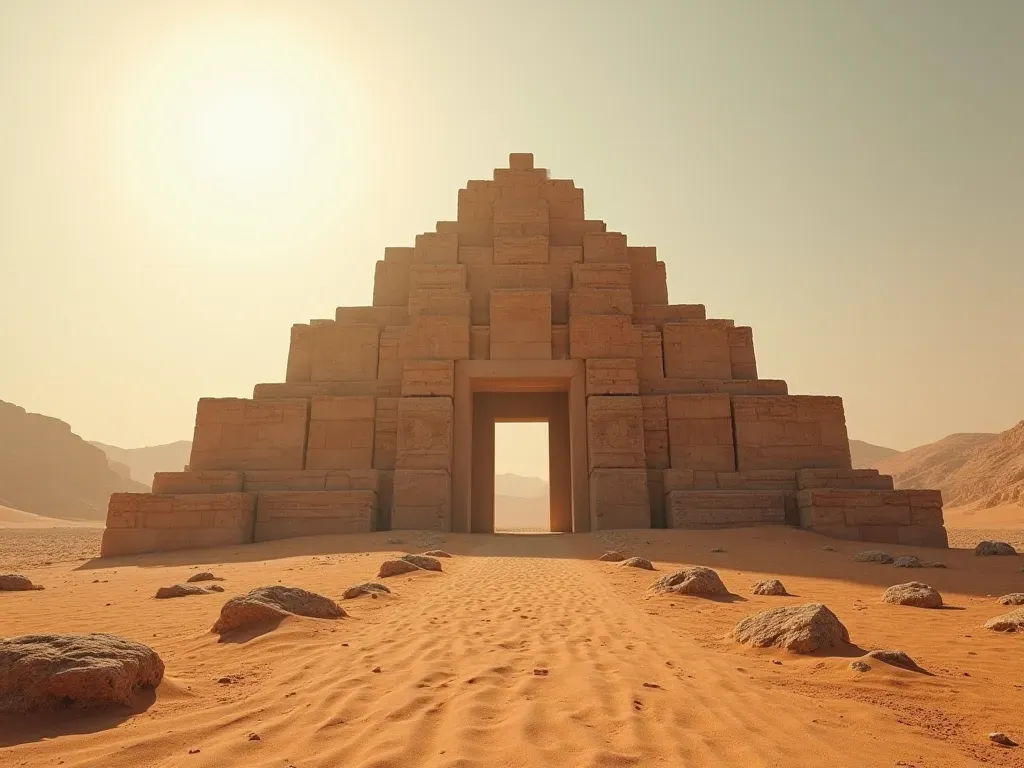
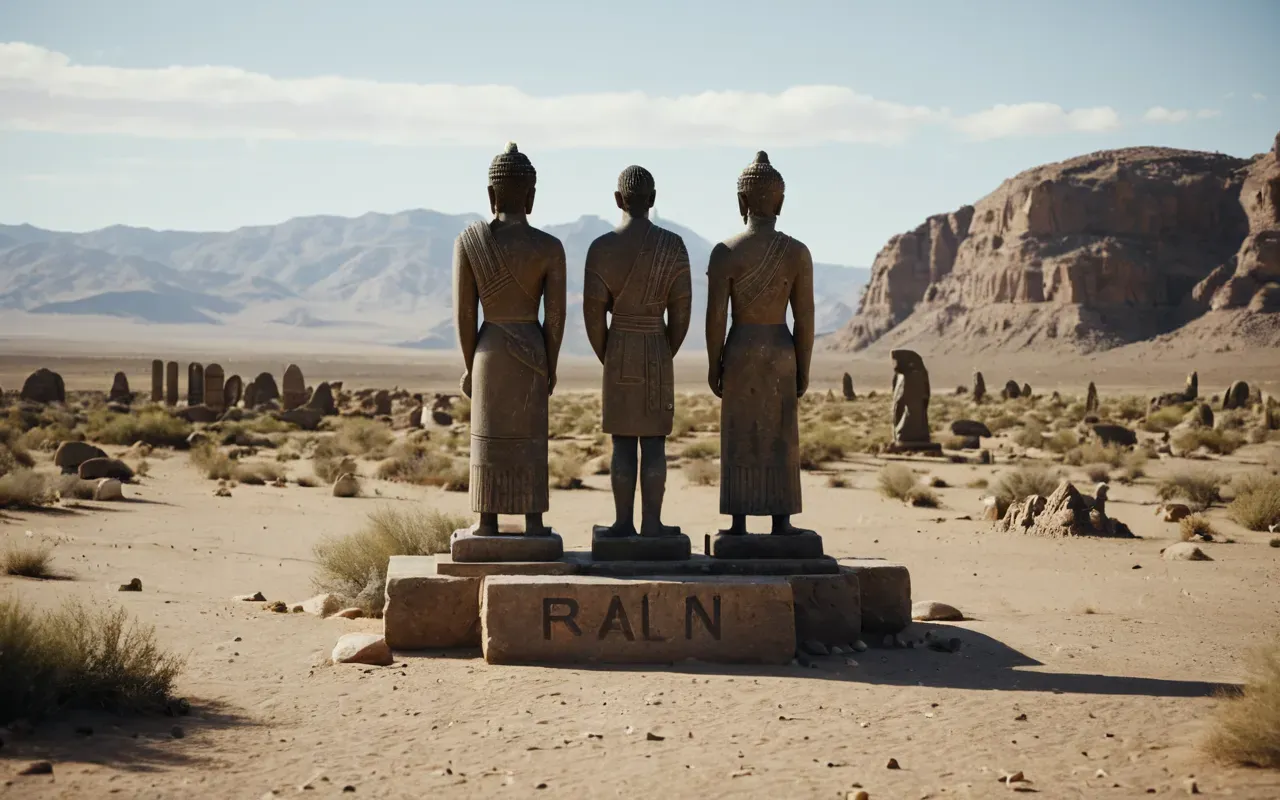
Picture a vast, arid desert. Sun hammering the sand. You're not here to farm — you're here to hunt. But instead of a simple camp, you find a carefully arranged shrine. Two stone figures stand guard. One tall, one short. Behind them, hundreds of sea fossils are laid out with surgical precision. This isn't a temple to a rain god or a harvest god. It's a shrine to the very tool of your survival: the hunting trap.
Most of us assume Neolithic religion was tied to agriculture. Grain, rain, the cycle of planting and reaping — that's the picture. But in southeastern Jordan, archaeologists have uncovered evidence pointing down a completely different path. The people of Jibal al-Khashabiyeh didn't just use their massive stone structures — desert kites — to catch gazelles. They worshipped them. They built miniature versions of these traps inside their ritual spaces. They carved images of the traps onto their sacred statues.
That's radical. It suggests that for these communities, hunting wasn't just a means to an end. It was a spiritual practice. The trap wasn't merely a physical object; it was a symbol of their relationship with the natural world — their ingenuity, their cooperation, their survival. By building a shrine to their traps, they were elevating the hunt to a sacred duty. Which challenges the old narrative that Neolithic people were simply transitioning from hunter-gatherers to farmers. Some of them were deepening their commitment to hunting, building a complex cultural identity around it.
Abu Ghassan And The Stone Guardian
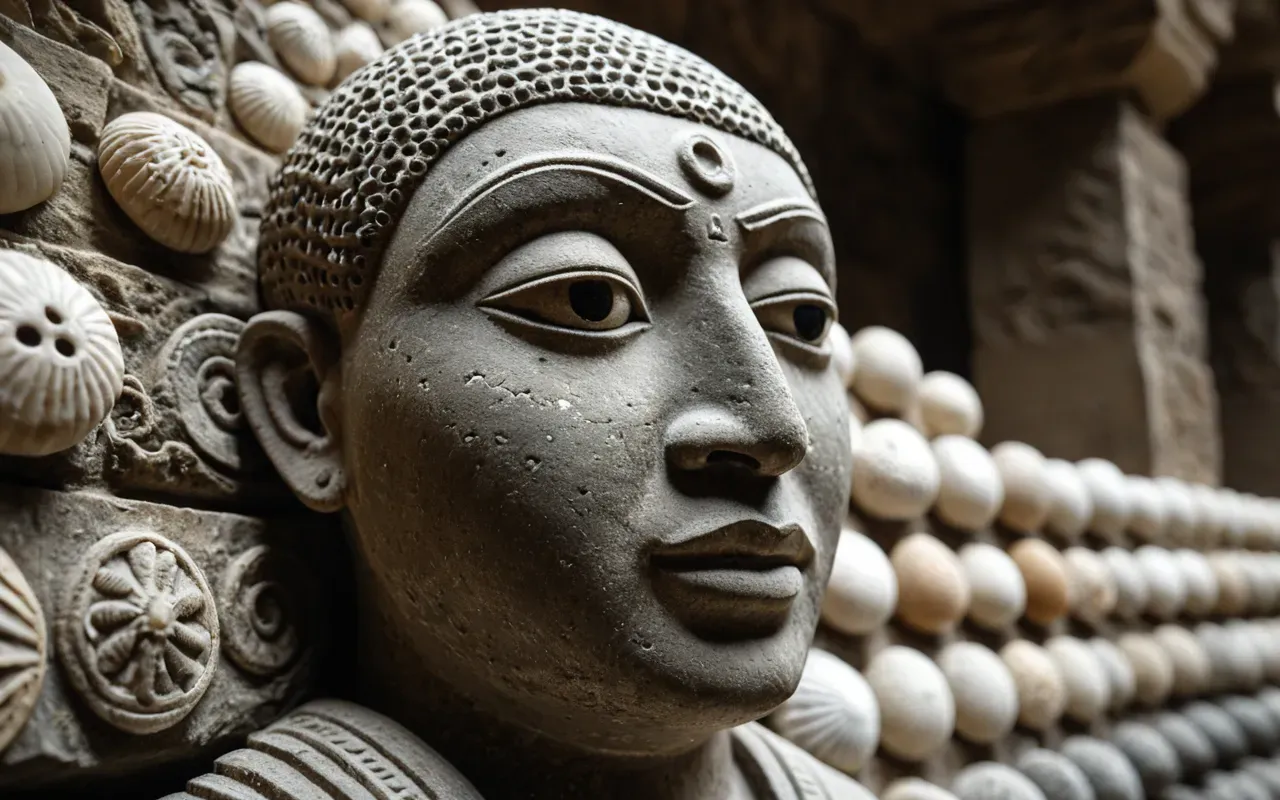
The taller of the two figures, nicknamed Abu Ghassan, is particularly intriguing. Standing about centimeters, it isn't just a human shape. Carved into its form is the distinct outline of a desert kite. Not a subtle detail. A clear statement. The figure embodies the hunter and the tool, merging the human element with the technological achievement. The smaller figure, Ghassan, at centimeters, has more detailed facial features. It feels more personal — perhaps a specific ancestor, or a deity associated with the hunt. Together, they form a diptych of survival.
I've seen many ancient statues. Most are abstract or purely human. This one is different. It's a hybrid. It tells us the boundary between the human and the tool wasn't fixed. For these people, the kite was an extension of their body, their will, their spirit. Choosing to carve the kite into a human figure suggests a deep psychological identification with the technology. It wasn't something they used; it was something they were. That level of integration between tool and user is rare in the archaeological record. It implies a sophisticated understanding of the trap's power — and a desire to honor that power through ritual.
The Marine Fossil Mystery
Behind the standing stones, the excavation team found nearly marine fossils. This is where the story gets even more confusing. The site is in a desert. Arid. Far from the sea. So why are there hundreds of sea fossils arranged in a deliberate pattern? Many stood vertically, as if part of a wall or a screen. Not scattered randomly — placed with care. Which suggests the sea, or what it represented, mattered to these people. Maybe symbols of abundance. Maybe a different world, a past when the region was wetter. Or offerings to the spirits of the water, believed to control the rains that kept the desert alive.
Archaeologists have confirmed the arrangement was intentional. The symbolic meaning remains a mystery. Classic case of data without context. We have the objects, but we don't have the belief system. We can see they valued these fossils, but we can't say why. That gap is frustrating. It reminds us archaeology isn't just about finding things — it's about interpreting the human mind. And the human mind of , years ago is often far more complex than we assume. These fossils suggest a worldview connecting the desert, the sea, and the hunt in a way we're only beginning to grasp. A rich spiritual ecology we're still decoding.
Hunting As A Sacred Economy
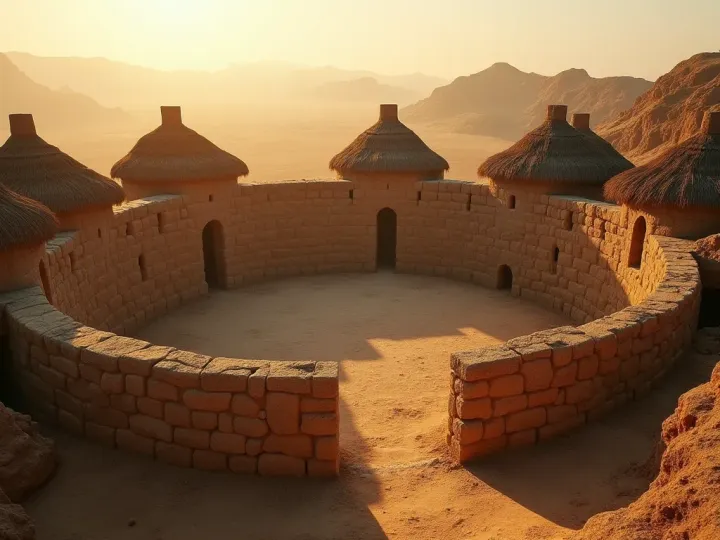
Let's talk about desert kites for a moment. They're not kites the way we think of them. They don't fly. They're massive stone structures, often spanning several kilometers — long, converging walls that guide herds of animals toward a central enclosure. A masterpiece of engineering. It requires coordination, planning, labor. A communal effort. And for the people of Jibal al-Khashabiyeh, it was the center of their economy. They hunted gazelles. They relied on these traps to feed their families. They built their settlements around them. They organized their lives around the cycle of the hunt.
But the shrine at JKSH P reveals that the hunt was more than just economic. It was social. It was spiritual. The miniature kite in the shrine suggests the community saw the trap as a unifying force — a symbol of their cooperation, a testament to their collective strength. By venerating the trap, they were celebrating their ability to work together. In a world of scarce resources, cooperation was survival. And by making that cooperation sacred, they reinforced the social bonds that kept their community together. A profound insight into Neolithic society. Technology, even prehistoric technology, had social and spiritual dimensions we often overlook.
A Different Path To Complexity
We often view the Neolithic period as a linear progression. Hunter-gatherers become farmers. Simple societies become complex. But the evidence from Jibal al-Khashabiyeh suggests a different model. Here, a hunter-gatherer society was developing its own form of complexity. They weren't just adopting agriculture; they were refining their hunting strategies. Building larger, more efficient traps. Creating new forms of social organization. Developing new ritual practices. Not a step backward. A different path to the same destination: a complex, organized human society. It challenges the idea that agriculture was the only route to civilization.
This is a crucial point. For too long, archaeologists have focused on the rise of agriculture as the defining moment of the Neolithic. But this discovery shows other paths were possible. The Ghassanian tradition, as it's known, represents a distinct cultural identity. Not a precursor to farming — a parallel development. Human ingenuity can take many forms. It can be expressed through the cultivation of crops or the engineering of stone traps. Both require planning, cooperation, and innovation. Both create complex social structures. The difference is in the focus. One is on the land; the other is on the hunt. And in this case, the hunt was enough to build a sophisticated culture.
The Dating That Changed Everything
The dating might be the most important part of this whole discovery. A study published in gave us some of the earliest secure direct dating evidence for desert kites, combining radiocarbon dates with optically stimulated luminescence measurements. The result was clear. These installations were built and used in the second half of the eighth millennium BCE. That puts the desert kites firmly in the Neolithic period — not some later invention, but part of the early Neolithic itself. Why does that matter? Because it means these complex hunting technologies were developing at the same time as early agriculture. Not competing with it. Coexisting with it.
This dating also helps us understand the context of the shrine. It wasn't a late addition. It was part of the original Neolithic landscape. The people who built the shrine were the same people who built the kites. They weren't imitating a later culture; they were expressing their own contemporary beliefs. That gives the shrine a much stronger claim to authenticity. It's not a copy — it's the original. It reflects the beliefs and practices of the people who actually lived there. And it shows that the ritualization of hunting was an early Neolithic phenomenon. Not a response to the decline of hunting, but a celebration of its success. Counter-intuitive? Sure. But the evidence supports it.
Preservation And Public Engagement
The discovery of these objects has also led to a major conservation effort. Jordanian and French specialists have worked together to clean and conserve about archaeological objects, using techniques like photogrammetry and D scanning. These methods let researchers record the details of the artifacts without handling them too much. Important for preservation. Also important for education. The goal is to make these finds accessible to the public, and the teams have proposed incorporating the material into the permanent exhibition of the Petra Museum. Visitors will be able to see the ritual practices of these ancient hunters with their own eyes.
I think this is a crucial step. Archaeology often gets written off as a niche field. But the story of Jibal al-Khashabiyeh is universal. It's about survival, cooperation, and belief. It's about how humans find meaning in their work. By bringing these objects into a museum, we're making that meaning accessible — inviting people to engage with the past on a human level. It's not just about dates and artifacts. It's about understanding the human experience. And in a world that's often disconnected from the natural world, this connection is vital. It reminds us that we're part of a long history of human ingenuity and adaptation. It shows that even , years ago, people were asking the same questions we are asking today: How do we survive? How do we work together? How do we find meaning?
The Bigger Picture
So what does this all mean? It means our understanding of the Neolithic is incomplete. We've been focused on the wrong things — looking for agriculture, for cities, for writing. But the real story is in the details. The small objects, the ritual practices, the social structures. The way people related to their environment. The shrine at Jibal al-Khashabiyeh is a window into that world. It shows us a society that was sophisticated, cooperative, and deeply spiritual. Not primitive. Not a failed attempt at civilization. A successful adaptation to a harsh environment — and a culture that found beauty and meaning in the act of hunting.
History isn't a straight line. It's a web — a complex network of choices, adaptations, and innovations. The people of Jibal al-Khashabiyeh made different choices than their neighbors in the Fertile Crescent. And those choices led to a different kind of culture. A culture just as valid, just as complex, and just as important as any other. We need to broaden our perspective. Look beyond the familiar narratives. Recognize the diversity of human experience. And appreciate the ingenuity of our ancestors. They weren't just surviving. They were thriving. They were creating meaning. And they were doing it in ways we're only beginning to understand.
The discovery of the shrine at Jibal al-Khashabiyeh is a testament to the power of archaeology. Even the smallest objects can tell the biggest stories. The past isn't dead. It's alive. It's present. It's part of who we are — and it reminds us that we're all part of a long, continuous story. A story of survival, of cooperation, and of meaning. That's a story worth telling. It connects us to the past, informs our present, and will shape our future. So the next time you see a stone, think about the hands that shaped it. The minds that created it. The beliefs that inspired it. And remember that we're all part of the same human story. A story of resilience. A story of creativity. A story of us.