The Neolithic city that outlasted its own soil and why it should worry you
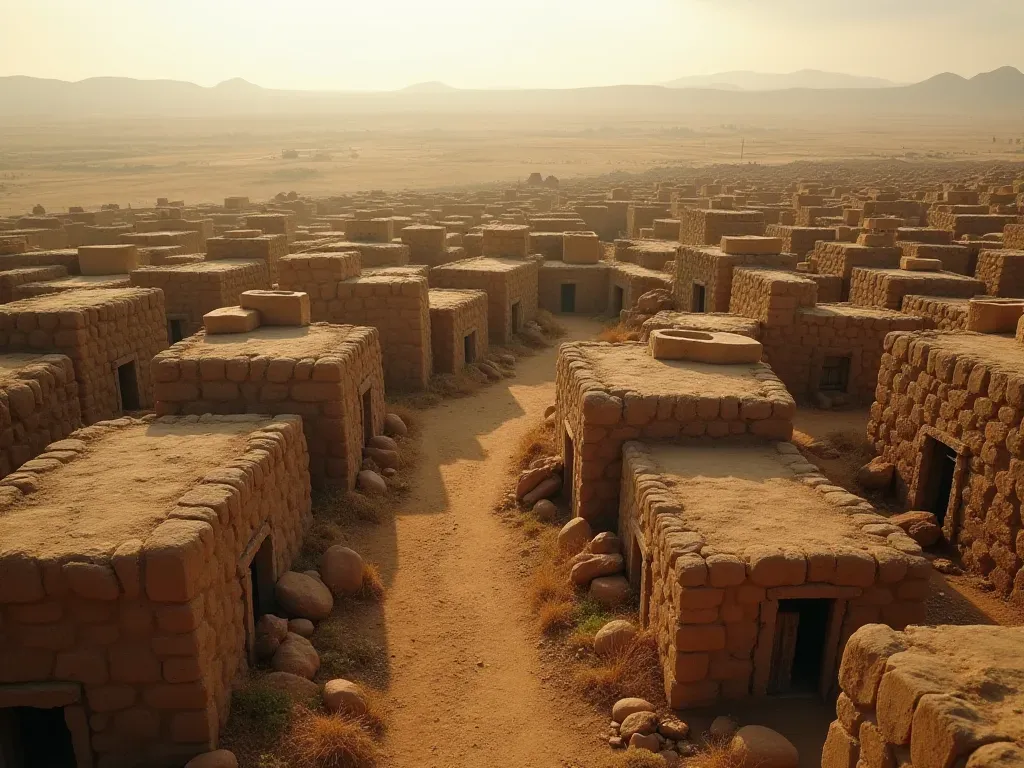
The Trap That Killed a Thousand-Year City
We like to think ancient civilizations collapsed because the sky turned against them. A drought hit. Rivers dried up. Simple story. But spend some time with Çatalhöyük and it gets complicated fast.
This settlement in Central Anatolia held on for over a thousand years. Dense. Sophisticated. Alive. Then, one day, it moved.
For decades, the standard explanation pointed at the 8.2 ka event. A global cooling spike roughly 8,200 years ago. Sounds neat. Sounds plausible.
But a fresh study out of Istanbul Technical University just overturned that narrative. They didn't study the weather.
They studied the soil instead. Specifically, how that soil crumbled beneath the weight of its own success.
Building a Virtual Past to Break Old Myths
The team built an agent-based model. Picture it as a virtual lab where you can run history over and over.
They simulated individual households making day-to-day choices. Where to plant. Where to graze. When to pack up and go.
In total, they ran 270 scenarios. Three distinct time windows. Three production strategies. Three climate regimes.
The question was straightforward, even daring. Was the migration to the western mound a deliberate decision, or a forced retreat?

The findings hit hard. Only intensive farming kept the population viable across every period tested.
Mixed approaches failed. Livestock-only systems tanked demographic numbers fast.
The Counterintuitive Early Advantage
Here's the twist though. In the beginning, drier weather actually gave them an edge.
Less rain meant less erosion. Soil stayed productive longer. Farmers could push the land harder than ever.
But that advantage was borrowed money. And the interest came due with a vengeance.
When Success Becomes Your Worst Enemy
The model exposed a dramatic change in population dynamics. Early on, the numbers held steady.
By the later phase, they split into twin peaks. A bimodal distribution. The whole system was shaking.
That's a textbook early warning signal. The kind that precedes system failure.
They called it a rigidity trap. An entire society locked into a single strategy that had stopped working.
The Cost of Staying Put
As soil quality declined, farmers trekked farther from the core. The settlement's footprint fractured.
Erosion went from minor nuisance to structural catastrophe. The ground became brittle beneath them.
The expense of supporting such a packed population became impossible to write off.
Why This Matters for Us Right Now
We love blaming outside shocks. Pandemics. Wars. Climate chaos.
But internal burnout is quieter. It accumulates invisibly until the floor just gives way.
Curious how these ancient dynamics mirror our own? Take a look at how Neolithic land use challenged modern environmental assumptions.
The shift to the western mound wasn't surrender. It was a recalibration.
They crossed the river and found virgin terrain. A chance to start over with less inherited baggage.
That capacity to pivot when staying gets too costly — that's what resilience actually looks like.
The Broader Implications for History
This complicates the assumption that climate change is the primary trigger of societal collapse.
Climate was a chronic stressor. A low hum in the background that magnified existing fractures.
The pattern echoes other research on how the Neolithic was more than just a farming shift.
What it tells us is to examine entire systems. Not just isolated variables.
Short-term wins can mask deep-seated weaknesses. That's a dangerous illusion.
Lessons for Modern Resource Management
We're living it right now. Sprawling cities. Degraded farmland.
The real challenge is spotting when the price of staying put outweighs the risk of moving on.
It's not about dodging change. It's about knowing the right moment to embrace it.
The Future of Computational Archaeology
This study cracks open a new avenue. We can finally simulate long-term societal dynamics.
Future research might trace the western mound's occupation, building on these findings.
The same approach could illuminate other ancient sites we thought we understood.

It shifts us away from tidy single-cause stories. Toward grasping messy, interconnected systems.
That's a genuine leap in how we think about human resilience and our capacity to adapt.