Archaeologists found marks on ancient arrows that might just break their brains
The Marks That Refuse to Be Decoded
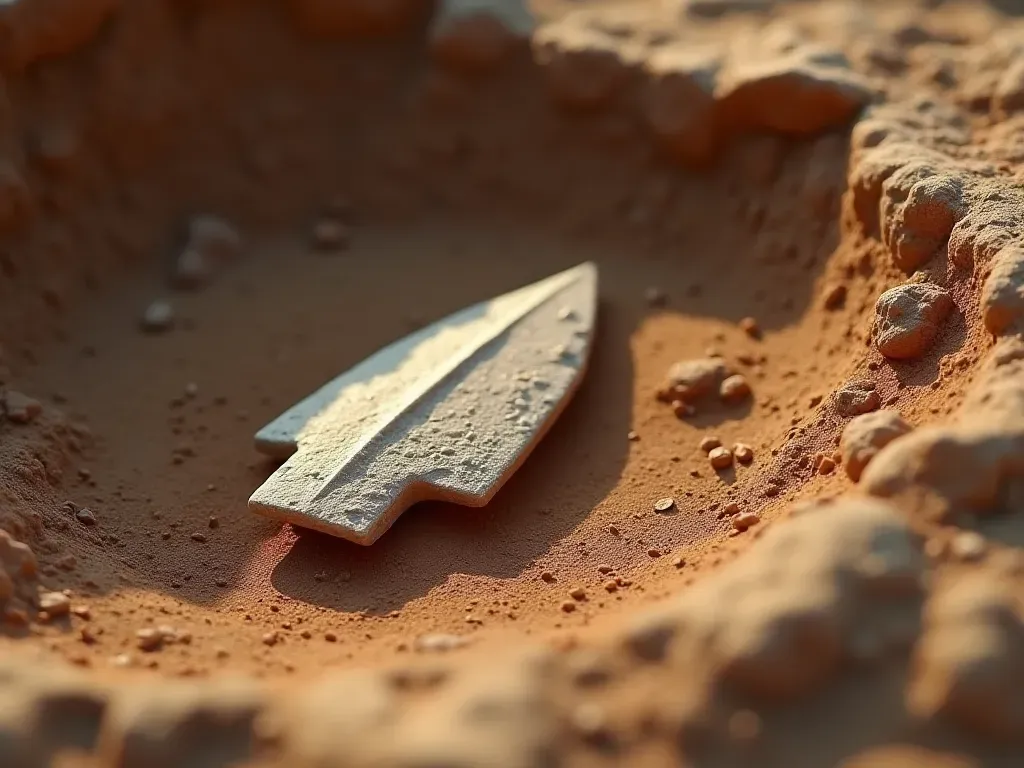
Imagine holding a weapon made of volcanic glass. It is razor sharp and perfectly balanced. Now imagine someone spent twenty strokes carving a pattern into its surface.
That is exactly what happened nine thousand years ago. Pastoralists in central Anatolia etched cryptic geometric designs into their obsidian arrowheads. These marks have never been seen anywhere else on Earth.
We know they were deliberate. We know they took effort. But we have absolutely no idea what they mean. That is the kind of puzzle that keeps archaeologists up at night.

Why This Discovery Changes Everything We Think
Here is the thing that surprises me most. These arrows were not special tools. They looked identical to every other arrowhead found at the site.
They sat in ordinary dwellings and workshop debris. They showed standard use-wear from hunting or conflict. Nothing about their physical context screamed importance.
Yet the carvings existed for over a thousand years. That is generations of people choosing to mark their weapons in this specific way. It was not an accident.
The Rarity of the Decorated Points
Out of thousands of obsidian arrowheads unearthed in the region, only fifty-four are engraved. That is a tiny fraction.
This rarity suggests exclusivity. If every hunter had one, it would be normal culture. But only a handful carried these marks.
So who were they? And why did they care enough to spend time on such a small detail? The answer remains stubbornly hidden in the past.
The Baffling Details That Defy Logic
Researchers analyzed the new finds from Tepecik-Çiftlik. Eleven additional arrowheads joined the collection of engraved points.
The dating places them between nine thousand and eight thousand years old. This extends the timeline of this mysterious tradition significantly.
But here is where it gets weird. Every single design is unique. There are no repeating patterns or shared motifs across all fifty-four examples.
The Intentionality Behind the Marks
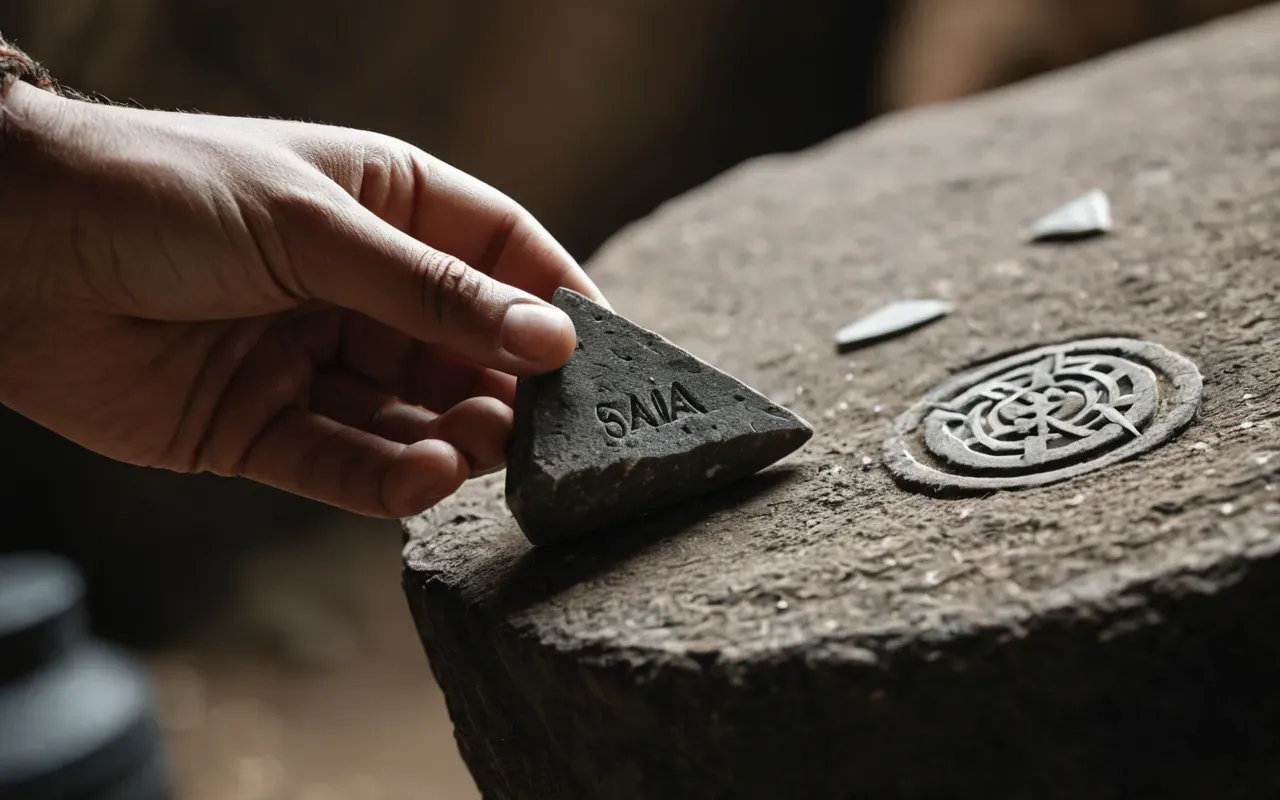
These were not accidental scratches. The marks required rare materials like flint to create visible lines.
In one case, a toolmaker went over the same mark about twenty times. That level of repetition shows deep intent.
Some arrowheads were etched after full manufacture. Others were marked before edges were retouched. The process varied wildly.
Production Variations Across the Collection
This inconsistency breaks traditional theories of standardized ritual objects. If it were a uniform religious symbol, we would expect consistency.
Instead, we see individual expression. Or perhaps random experimentation. The line between the two is blurred by time.
Who Wins and Who Loses in This Mystery
Let us talk about the hunters. They were practical people focused on survival.
Their tools needed to be sharp and reliable. Adding decoration seemed counterproductive from a pure efficiency standpoint.
Yet they did it anyway. This suggests the marks served a social or psychological function beyond mere utility.
The Identity Tag Hypothesis Problem
One theory suggests the marks were personal identifiers. Hunters used them to claim credit for their kills.
That makes sense in theory. But the numbers do not support it. Only fifty-four arrowheads carry these marks over a millennium.
If every hunter had one, we would see thousands. The scarcity makes the identity tag idea difficult to defend.
The Implication Nobody Is Talking About
We tend to view Neolithic societies as simple and uniform. This discovery challenges that assumption directly.
These people had complex social dynamics we cannot fully grasp today. The marks hint at a depth of interaction we underestimate.
If you think about how the Neolithic Age was actually a tech boom, this fits perfectly. Innovation was not just about tools.
It included social technologies too. Ways to communicate identity and status without words. These arrowheads are physical evidence of that shift.

Why This Changes More Than People Think
We often separate art from utility in ancient contexts. These arrowheads blur that boundary completely.
The same object served as a weapon and a canvas for personal expression. That dual function changes how we view early human ingenuity.
Consider the ongoing debate about these ancient markings. It is not just an academic curiosity.
It forces us to rethink what we know about prehistoric communication and social structures. The implications are far broader than one site suggests.
The Broader Context of Neolithic Innovation
Central Anatolia was a hub for obsidian tool production. Thousands of artifacts have been found across the region.
This engraving tradition is unique to this area. No other culture from that period shows similar behavior on their tools.
That isolation makes it even more puzzling. It suggests a local innovation that never spread or was lost to history.
The Skeptical View on Current Interpretations
I have to be honest. The current explanations feel unsatisfying.
Researchers suggest the marks could be simple decoration or magical practices. But they admit there is no decisive argument for either.
The study authors state that these interpretations are not mutually exclusive. That is a polite way of saying we have no idea.
The Problem with Deciphering Ancient Symbols
We lack a Rosetta Stone for these marks. There is no bilingual text to help us decode the meaning.
Without context clues from graves or ceremonial sites, we are left guessing based on physical evidence alone.
The functional evidence shows these arrows were used for hunting. That contradicts purely symbolic interpretations.
The Backstory That Was Skipped in Coverage
Archaeologists have known about this tradition for decades. Yet the mystery persists because new evidence keeps complicating old theories.
Each discovery adds more questions than answers. The Tepecik-Çiftlik find is the latest chapter in this long-standing puzzle.
The researchers note that the engraved points are physically identical to regular ones. This lack of distinction is what makes them so confusing.
The Role of Obsidian in Prehistoric Trade
Obsidian was highly prized for its sharpness and shiny appearance. It traveled far from its volcanic sources.
Central Anatolia was rich in this material. The abundance allowed for specialized tool production and experimentation.
This resource wealth likely supported the cultural practices we are trying to understand today. Material abundance enables symbolic complexity.
What This Means for Our Understanding of History
We tend to view history as a linear progression toward complexity. These arrowheads complicate that narrative.
They show that symbolic expression existed alongside practical survival in the Neolithic period. Both were equally important.
This challenges us to look for similar patterns elsewhere in the archaeological record. We may be missing other subtle forms of communication.
The Connection to Modern Cultural Heritage
Understanding these ancient traditions helps us appreciate the depth of human creativity. It shows that innovation is not new.
The Taş Tepeler project highlights how Neolithic societies were innovation hubs we often dismiss as primitive.
These arrowheads are physical proof of that ingenuity. They remind us that our ancestors were as complex and creative as we are.
The Final Mystery We May Never Solve
We have the physical evidence. We have the context clues. But we still do not know what these marks meant.
That is frustrating but also humbling. It reminds us that the past holds secrets we are not yet equipped to understand.
Perhaps the mystery itself is valuable. It keeps us curious and drives further research into these fascinating artifacts.
Until then, the arrowheads remain silent witnesses to a world we can only partially reconstruct. And that silence speaks volumes about our limitations.