Why Turkey's Archaeology Boom Is Actually A Quiet Crisis
The quiet explosion of unneeded degrees
Every year, a thousand graduates walk across the stage. Diplomas in hand, in a field with almost no jobs waiting for them.
Sounds like a higher-ed success story, right? Retired archaeology professor Fahri Isik sees something very different.
A quiet crisis, he calls it. Türkiye now has forty-five archaeology departments. Forty-five. For a discipline that depends on a limited number of excavation sites and tiny research teams, that number is absurd.
Honestly, that statistic alarms me. We're churning out specialists faster than we can possibly employ them.
So what happens? A whole generation of trained minds leaves the field. They don't become museum curators or site directors. They drift into unrelated jobs.
Why opening a department is not enough
And here's the thing nobody talks about. A building with a plaque that says Archaeology is not an institution.
Isik spent decades building the real foundation of this field. He helped launch programs in Erzurum and Antalya, from scratch.
He knows what it takes. Specialized researchers. Deep library archives. Field equipment that's actually maintained.
Most new departments have none of that. They open to meet enrollment quotas, not research goals.
And without those resources, training quality plummets. Students learn theory in a vacuum. They never see how real excavation works under pressure.
The Erzurum experiment that worked because it was small
Let's look at the backstory Isik skips in most interviews. In , he arrived in Erzurum to build a department.
It was the third archaeology program in the country. It started with very few students and a tiny team of dedicated scholars.
That small scale was its greatest strength. Professors knew every student by name.
They didn't just lecture from slides. They went into the field together. Students handled tools, recorded finds, and argued over the results across long meals.
That hands-on immersion produced a generation of highly competent archaeologists. Many went on to lead major excavations across the region.
The cost of losing key faculty members
But stability is fragile. Between and , several founding academics left the department.
Isik had to step in and teach more courses than he ever planned. The team got thinner every year.
It's a common pattern in expanding universities. You lose your best minds to better opportunities elsewhere.
And the ones who stay stretch themselves thin. Depth of knowledge suffers when one person covers three different specializations.
Patara and the fight against unauthorized construction
Isik's move to Antalya wasn't about academic ambition. It was fear for a specific site.
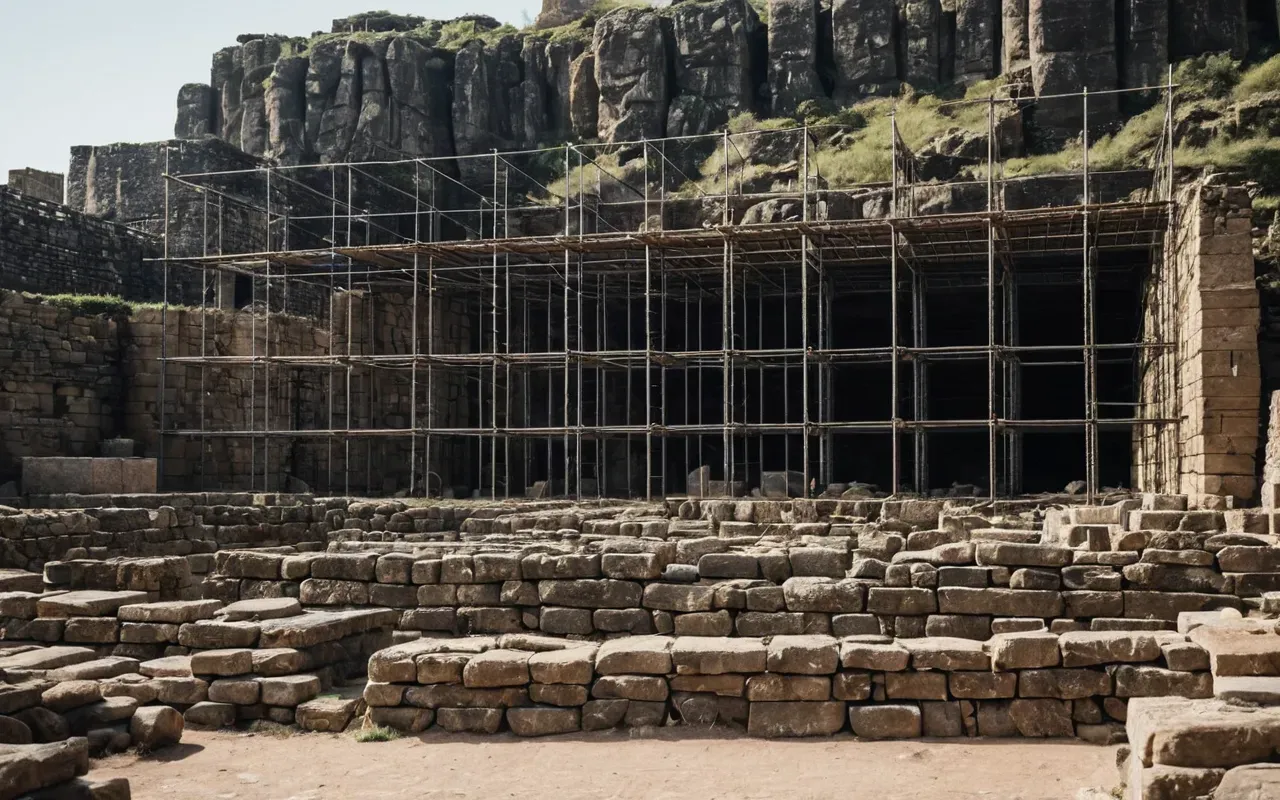
In , he visited the ancient city of Patara. He saw construction activity inside a protected archaeological zone.
That was the breaking point. If no one with academic authority stood near the site, modern development would swallow it.
So he pushed Akdeniz University to open a department nearby. It admitted nineteen students in .
That created a direct link between academic research and physical protection. Scholars could monitor the site daily.
The global context of academic expansion
Isik often compares his experience with what he saw in Germany. There, archaeological education was tightly controlled.
Universities didn't open departments lightly. They required extensive library collections and specialized research facilities first.
The focus was depth. A small number of highly trained researchers produced significant scholarly work.
Türkiye took the opposite path. We expanded quantity to hit national education targets.
But does having more departments make a country stronger in archaeology? The evidence says no.
What this means for the future of history research
The core argument is simple. We need institutions that can think independently.
Not departments that exist to fill seats. Places where critical debate actually happens.
Anatolia's heritage is too complex for shallow study, Isik argues. It requires long-term commitment.
Keep graduating a thousand specialists with no jobs, and we waste talent while distorting the field.
The fix isn't closing departments. It's refusing to open new ones until the infrastructure can support real research.
Why this debate matters far beyond university walls
And this isn't just an academic argument. It affects how we preserve our shared past.
When archaeologists leave the field because they can't find work, sites lose their advocates.
Who stands up against construction threats when there are no senior scholars nearby to speak?
Nobody. What we need is a sustainable ecosystem, one where experts stay because the work supports them.
Until then, every new department is just another room with a plaque and no real power to protect history.