Archaeologists Just Found A Giant Ancient Village With No Kings And It Changes Everything We Know About Equality
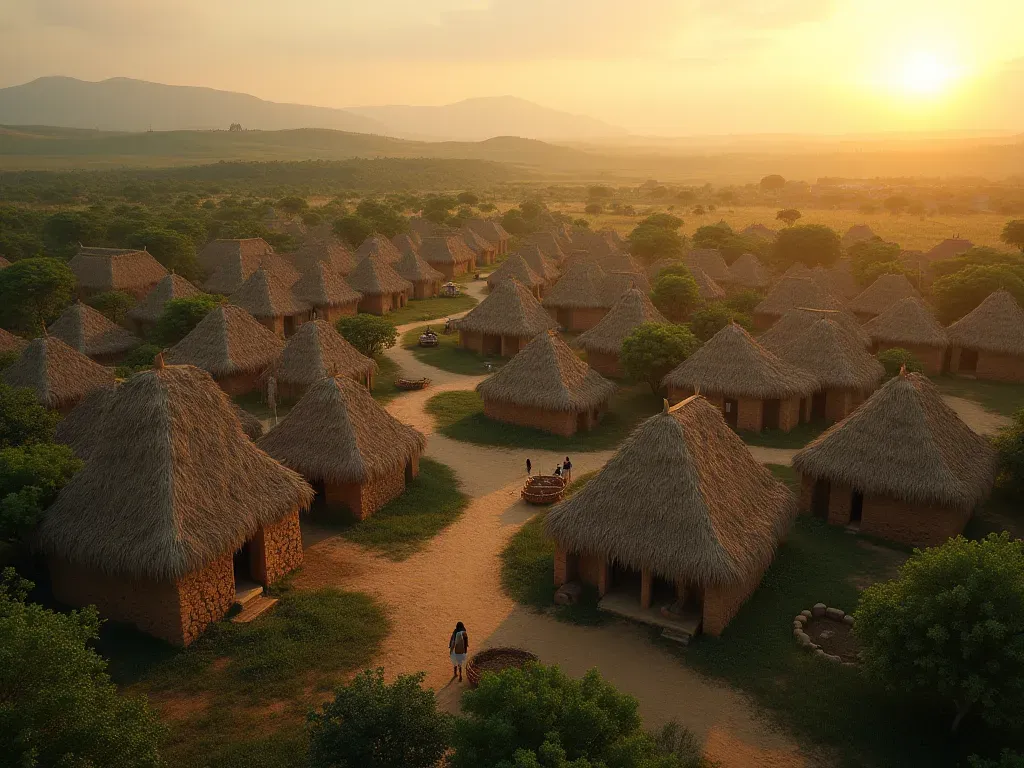
The Village That Broke The Hierarchy Assumption
For decades, the assumption held: large early communities needed strong leaders. More people, more concentrated power. That assumption is now crumbling in the dirt of northern Serbia.
A new study has re-evaluated the Neolithic site of Opovo, and honestly, the results are startling if you follow archaeological trends. This wasn't a small hamlet with a chief. It was a sprawling, crowded settlement that ran without obvious bosses.
We tend to picture the Neolithic as a chaotic mix of survival and early dominance. But here's evidence pointing somewhere else entirely: a society where hundreds of people lived together, shared resources, and somehow avoided deep social splits.
How Magnets Replaced The Shovel For This Discovery
Traditional digging is slow and destructive. You dig a trench, find some walls, guess the rest. The team behind this study used an eight-sensor magnetometer on a handcart instead.
They pushed the device across thirteen hectares of farmland. It picked up magnetic differences left by burned clay walls centuries ago — a picture trenches simply could not provide.

The magnetic image revealed a dense cluster of high-flux anomalies. Those signals correspond to burned house structures. Three archaeologists counted them independently and agreed on the number.
Up to two hundred and twenty houses. That's a massive number for a prehistoric site previously thought to hold only ten simultaneous households. The scale was hidden in plain sight.
A Population Boom Without A Power Struggle
Radiocarbon dating places the main occupation between four thousand eight hundred and fifty and four thousand seven hundred and twenty-five BCE. During this period, the village expanded significantly.
Estimates suggest a peak population of up to seven hundred people. Far larger than the two-hundred-person hamlet described in earlier reports from the nineteen-eighties digs.
The Math Behind The Numbers
Researchers used two different population models to calculate these figures. Both pointed toward a community significantly more crowded than previously believed.
The lowest estimate still suggests over one hundred and fifty inhabitants. The highest reaches seven hundred and eleven. That range points to a thriving, stable community, not a transient camp.
Ditches That Protected Everyone Equally
The team found up to five ditches surrounding the settlement. The main ditch was eleven meters wide and four point five meters deep at one entrance.
Every visible building in the magnetic image sits inside this ditch system. A protected space for each member of the community.
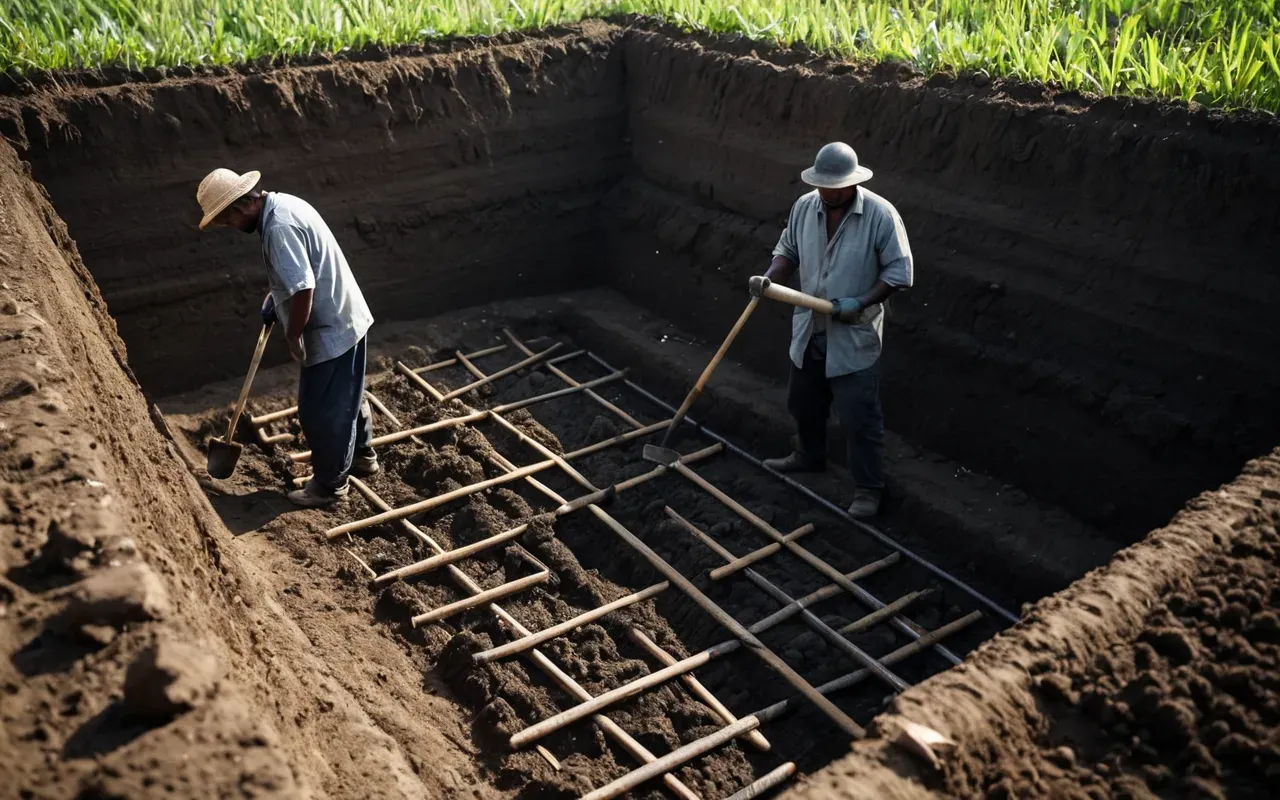
Digging these ditches would have taken thousands of person-days. If everyone in the village pitched in, it could still be done within a year or two.
Why This Suggests Collaboration Not Command
There is no evidence of a central authority forcing this work. The authors suggest these were collaborative endeavors meant to strengthen group cohesion.
So much for the idea that large-scale infrastructure requires a boss. Instead, it points to a society organized through mutual benefit and shared responsibility.
Houses That Reveal A Fairer Past
To measure wealth, the team analyzed house sizes from the magnetic data. The median floor area was forty-four square meters.
The smallest house was nineteen square meters and the largest one hundred and eleven. This variation exists but is not extreme.
The Gini Index Of An Ancient Village
Economists use the Gini index to measure inequality. Zero means perfect equality and one means total monopoly of wealth.
Opovo scored zero point two-two. Slightly below the average for Neolithic sites in this region.
Even when sampling random groups of houses to account for time differences, the maximum inequality remained low. Material wealth, it seems, did not drive social stratification.
What The Dirt Still Cannot Tell Us
Researchers are honest about the limits of this data. Many conclusions rely on well-justified assumptions rather than direct proof.
We do not know why the village was abandoned around four thousand seven hundred and twenty-five BCE. The reasons could be environmental, economic, or social.
The purpose of the large ditch is also unclear. It may have served as a boundary, defense against enemies, or protection from flooding in the marshy landscape.
Why This Changes How We View Early Societies
We tend to think complexity and inequality grow together. As groups get bigger, someone has to control them. Opovo breaks this simple narrative.
This site suggests large communities can function through cooperation rather than coercion. It offers a different model for how human societies develop.
If you are interested in how ancient innovations shaped our world, this is a vital piece of the puzzle. It reminds us that history is not just about power and war.
The methods used here also show the value of minimally invasive technology. We can reevaluate old findings without destroying more context.
For scholars and enthusiasts alike, this study is a reminder that the past holds more surprises than we expect. Equality was possible in ways we are only beginning to understand.