A 6,000 Year Old Skeleton From Denmark Shows What It Felt Like to Live Through the Neolithic Revolution
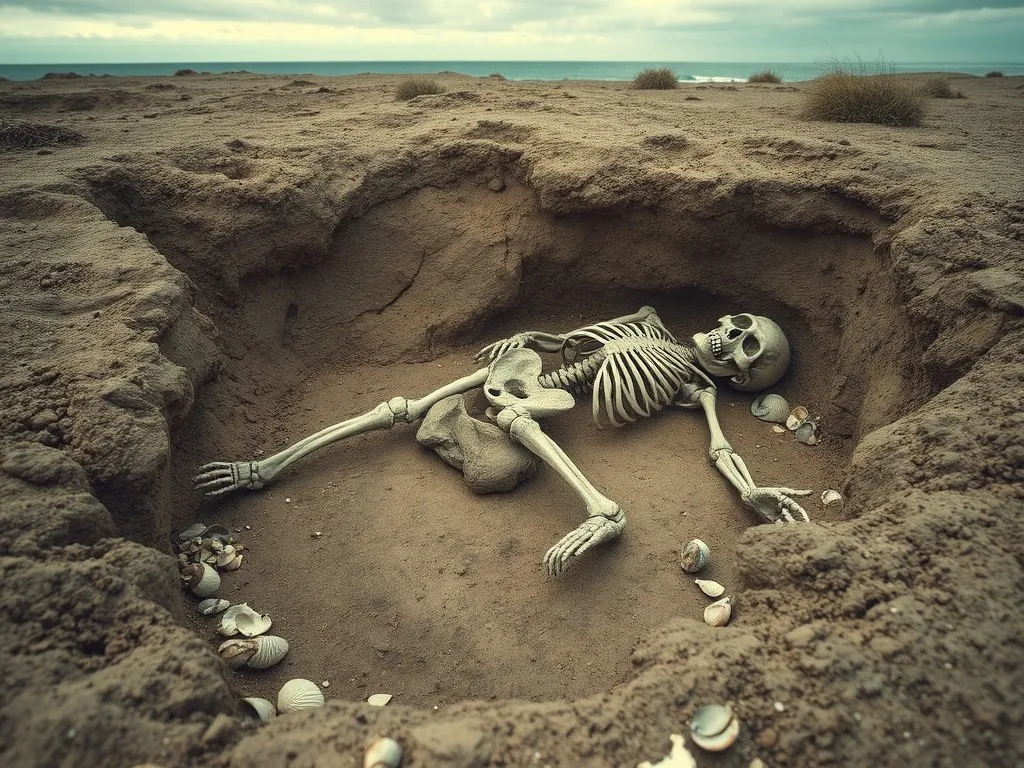
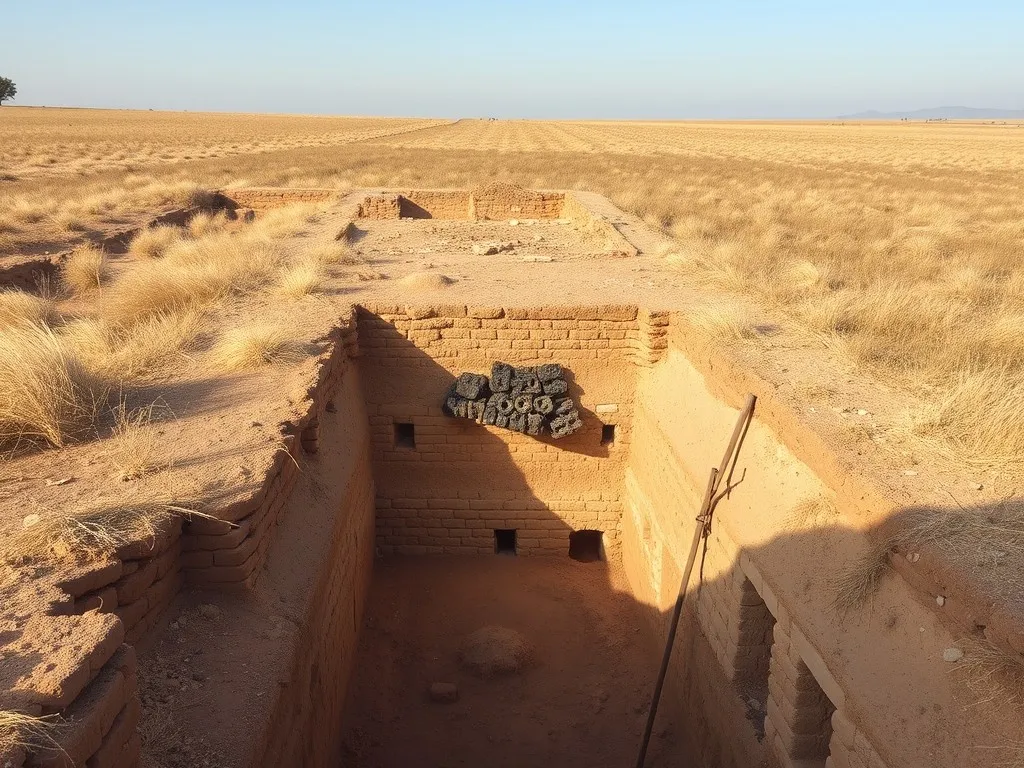
A single grave on a small Danish island has given archaeologists something they almost never get — a named individual who lived through the arrival of farming. He is called Rødhals Man, and he died roughly 6,000 years ago on Sejerø, buried in a shell midden. His skeleton survived intact. So did the story in his teeth and bones.
Here is the part that should stop you cold. Foragers seem to vanish from the archaeological record the moment farmers appear. One day the fish bones and shell heaps are there. The next, they are gone. Rødhals Man sits right on that seam, and he did not disappear.
What the Isotopes Actually Revealed
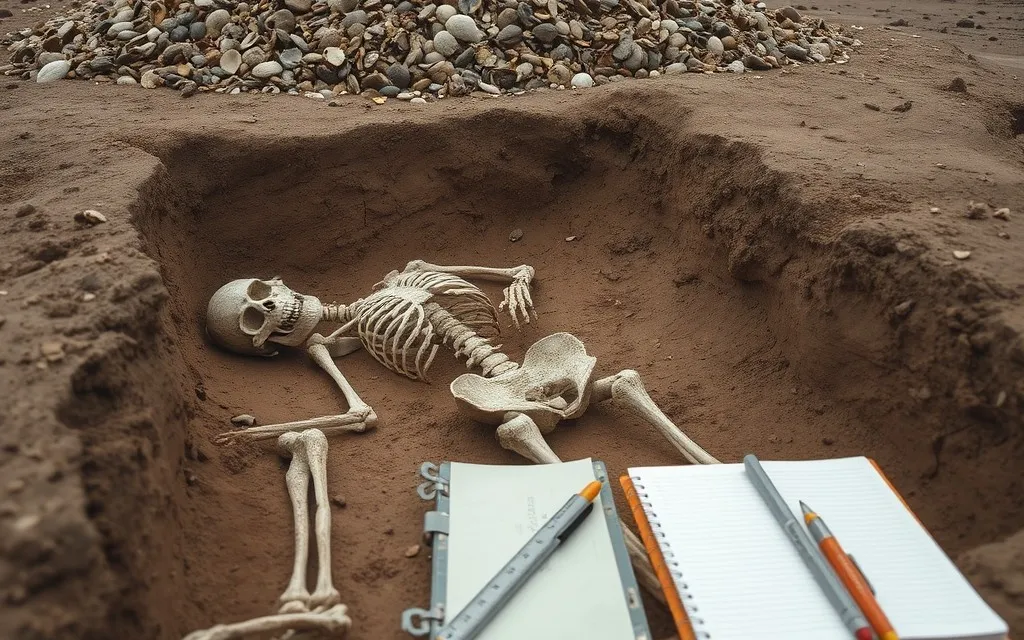
The research team, led by Dr. Anders Fischer of the University of Gothenburg, combined radiocarbon dating, ancient DNA and isotope analysis to reconstruct about 40 years of one life. The paper appears in Antiquity. The results are unusually granular for a Mesolithic burial.
Radiocarbon dating placed him well after farming reached nearby Zealand around 3900 B.C. But his DNA is entirely indigenous — a typical European Western Hunter-Gatherer. No farmer ancestry. Not a migrant, not a settler's child. A local who stayed.
Then the chemistry gets interesting. His isotopes show heavy marine dependence in childhood. Fish, sea mammals, shellfish. Later in life, the signal shifts toward terrestrial foods — sharply. He ate far more land-based food than other foragers, and his burial resembles Early Neolithic farmer graves more than Late Mesolithic hunter-gatherer ones.
The Quiet Middle Path Nobody Expected
The obvious readings are that he joined the farmers or fled from them. Neither fits. Fischer's conclusion is that Rødhals Man adopted some components of farmer culture while keeping the way of life of his indigenous ancestors. He never gave up the sea. He just stopped relying on it alone.
Dr. John Meadows of the Leibniz Center for Archaeology framed the questions the team wanted to answer. Was the arrival of farmers a threat or an opportunity? What were the risks of engaging with the newcomers, and the opportunity costs of refusing? Was there a realistic alternative?
Those are not abstract academic questions. They are the questions every community facing a dominant new economy has asked since. And Rødhals Man appears to have answered them with a partial yes.
Why One Skeleton Beats a Thousand Pot Sherds
Archaeology usually speaks in aggregates. Hundreds of bones, thousands of sherds, a statistical fog where individual choices dissolve. That is why the honest caveat from Fischer matters — this is only one person's story, and only one generation.
But the method is the real headline. High-resolution sampling plus multi-isotope ecology plus ancient DNA can now reconstruct a single life course, decade by decade. If that works once, it can work again. Fischer himself says the team hopes to eventually understand the choices, or fate, of any children and grandchildren of Rødhals Man.
That is a different kind of archaeology than the one most of us grew up imagining. If you have read about how the least glamorous work in archaeology often carries the biggest answers, this study is the proof. The drama is in the lab, not the trench.
What This Means for the Bigger Neolithic Picture
The transition from foraging to farming gets told as a switch. Hunting ends, wheat begins, villages appear. Rødhals Man suggests it was often a slow negotiation measured in meals, marriages and trade. And the people on the receiving end were not passive.
That framing travels well beyond Denmark. In Anatolia, the same centuries produced the settlements behind the Taş Tepeler project, where the shift toward farming and permanent living reshaped everything from tools to belief. Different geography, same human problem — how much of the new world do you accept without losing the old one?
For anyone following Neolithic research in Turkey, that question is not distant history. It is the thread running through every excavation report and every museum display built around early settlements. Rødhals Man just gave it a face.
The One Thing to Watch Next
The study's conclusion is blunt about rarity. Meadows calls Rødhals Man an incredibly rare find — the complete skeleton of someone who was an eyewitness to the shift from foraging to farming. He did not fully embrace the farmers' lifestyle, and he did not run away from them.
So watch the sampling programs, not the headlines. Every additional high-resolution skeleton from this window either confirms the middle-path pattern or breaks it. One man is an anecdote. A dozen would be a rewrite.
Source: msn.com