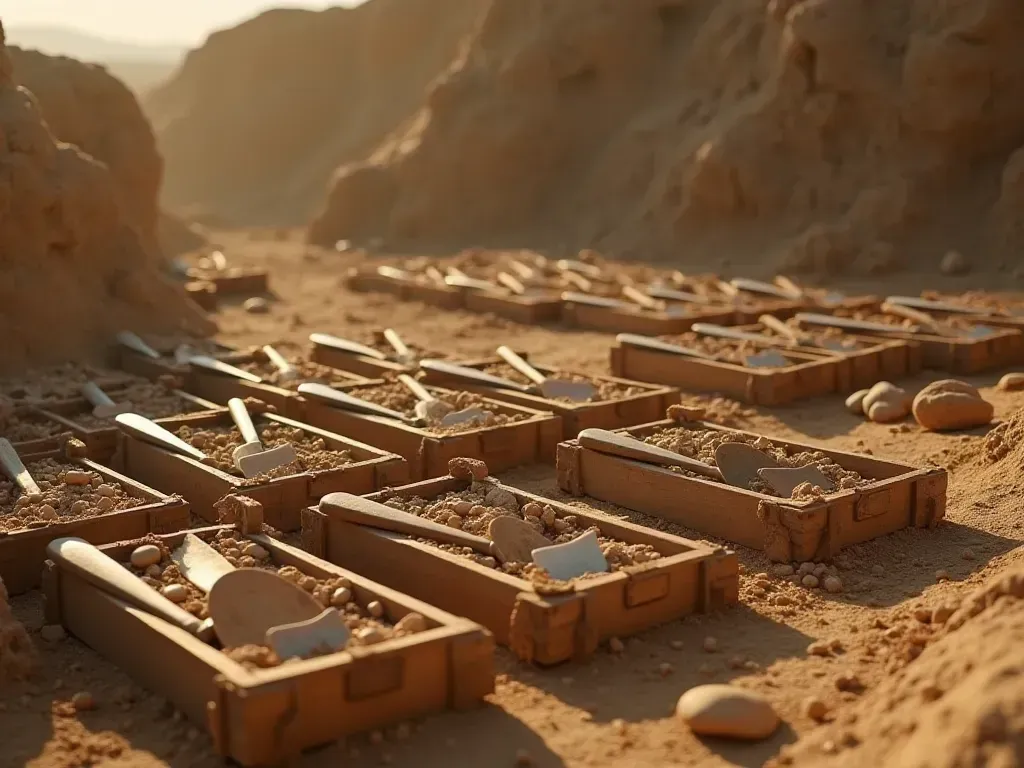
How Domestication of Wheat Changed Ancient Anatolian Life
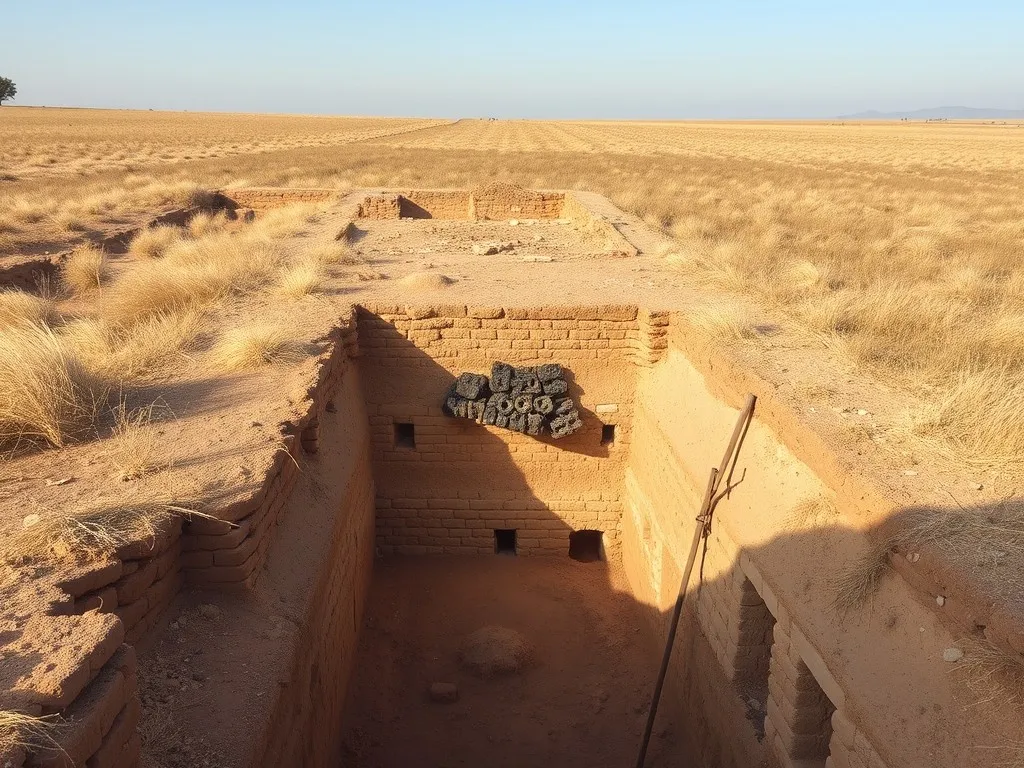
Wheat was domesticated in southeastern Turkey and the wider Fertile Crescent around 10,000 years ago. Domesticated einkorn turns up after about 8800 BC at Çayönü and Cafer Höyük, and domestic emmer at Çayönü by roughly 8300–7600 BC. Genetic work points to the Karacadag Mountains as the birthplace of einkorn. But a date and a map pin only make sense once you know what changed inside the plant itself.
Domestication is a genetic shift, not simply the act of harvesting. A wild wheat ear is brittle: its spikelets shatter at maturity and scatter seed onto the ground, which is how the plant reproduces without help. A domesticated ear stays intact and holds its grain until someone threshes it, a trait that is useless to the plant in the wild and only survives because people collect and sow the seed.
That shift may not have taken long. Some genetic models suggest a rapid transformation of wild wheat into a useful cereal crop, though the gradualist picture drawn later in this article points to a slower process, so the timing remains debated. Harvesting came first by a wide margin: hunter-gatherers in West Asia may have gathered wild wheats as early as 21,000 BC, thousands of years before any domesticated form appears in the record.
Not every wild wheat was a candidate. Wild einkorn comprises three distinct races, and only one of them, native to Southeast Anatolia, was ever domesticated. The others stayed wild, which is why the geography of the plant and the geography of the first farms line up so closely.
Where wheat was first domesticated in Turkey
The answer that holds up best comes from genetics rather than pottery. DNA fingerprinting traced einkorn, one of the founder crops of farming, back to a single corner of the ancient Fertile Crescent, the arc many experts treat as the place where agriculture was invented roughly ten thousand years ago. Within that arc, the trail narrows to the Karacadag Mountains of southeastern Turkey. The same area is where chickpeas and bitter vetch also originated, which makes it a plausible cradle for more than one crop at once.
The finding was published in Science by a team from the Agricultural University of Norway in As and the Max Planck Institute in Cologne. The method matters as much as the conclusion. The researchers gathered 1,300 variants of einkorn from ten gene banks around the world, cut the test group down to 338 samples whose geographic origin was known precisely, and scored those for 11 genetic traits. Only precisely provenanced material can point to a place rather than a collection.
Read the map with care. The Karacadag foothills sit in the northern Levant and upper Mesopotamia, not in the central Anatolian plateau where later farming villages spread. The wild race domesticated there is the ancestor that travelled west and north with the first farmers, so the region around Göbekli Tepe and the wider hill country belongs to the same early story. When a searcher asks where wheat was domesticated in Turkey, this is the stretch of ground to name.
The excavated sites that date Anatolian wheat
The sites that carry the dates sit in the southeast, along the upper Tigris and its tributaries, not on the central plateau. The earliest archaeological evidence for domesticated einkorn comes after about 8800 BC in southern Turkey, at Çayönü, Cafer Höyük, and possibly Nevalı Çori, according to the standard account of wheat's history. These are small, deeply stratified mounds where excavators recovered charred grains and spikelet fragments from floors and pits, material that can be measured and compared.
Emmer gives the firmer date. The earliest secure evidence for domestic emmer comes from Çayönü, roughly 8300–7600 BC, where distinctive scars on the spikelets mark a hulled domestic variety rather than a gathered one. That scar is the point: a wild spikelet shatters and drops its grain, while a domestic one holds, and the break leaves a signature an archaeobotanist can read under a lens.
Wheat did not travel alone. Einkorn and companion crops — barley, peas, lentils, chickpeas, broad bean, bitter vetch and flax — appear to have been domesticated in this part of the world between 9,500 and 10,000 years ago. Read as a package, that list describes a whole farming economy arriving, not a single plant being coaxed.
The Anatolian sites do not mark the beginning of wheat domestication; they mark the moment it becomes visible in the ground.
Keep the scale in view. Wheat domestication as a whole began approximately 12,000 years ago, so Çayönü and Cafer Höyük sit well inside a longer regional process that started elsewhere and ran for millennia. The same centuries produced the upheavals recorded in a 6,000-year-old skeleton from Denmark, a reminder that the shift from gathering to growing reshaped bodies far beyond Anatolia.
What the Çatalhöyük grain tells us about farming inland
Çatalhöyük sits on the Konya Plain, far from the southeastern foothills where the first domesticated cereals appear. The settlement was occupied from roughly 7400 to 6000 BC (calibrated), which places it comfortably after wheat had already become a crop rather than a gathered plant. Its plant remains show what that transition looked like once farming moved inland.
The British archaeologist James Mellaart found the site in 1952 and excavated it between 1961 and 1964, and the plant remains recovered from those campaigns show inland cultivation of domesticated wheat. The Çatalhöyük wheat seeds analyzed in the study are approximately 8400 years old, and the ancient samples represent the oldest wheat sample sequenced to date and the first ancient wheat sample from the Middle East. The Çatalhöyük wheat stock contained hexaploid wheat similar to contemporary hexaploid species including naked (T. aestivum) and hulled (T. spelta) wheat.
Ancient DNA work on the wheat seeds put their age at approximately 8,400 years. At the time of sequencing they represented the oldest wheat sample analysed and the first ancient wheat sample from the Middle East, which makes Çatalhöyük a reference point rather than a footnote. The genetics show that the Çatalhöyük wheat is genetically distinct from local wild stands.
The stored stock contained hexaploid wheat resembling modern naked bread wheat (T. aestivum) and hulled spelt (T. spelta). Both are domesticated forms, and their presence together suggests households were managing more than one kind of grain rather than relying on a single harvest. For a settlement of tightly packed mudbrick houses, that means storage, selection and protection had become part of ordinary domestic life.
How a wheat field reorganised Anatolian daily life
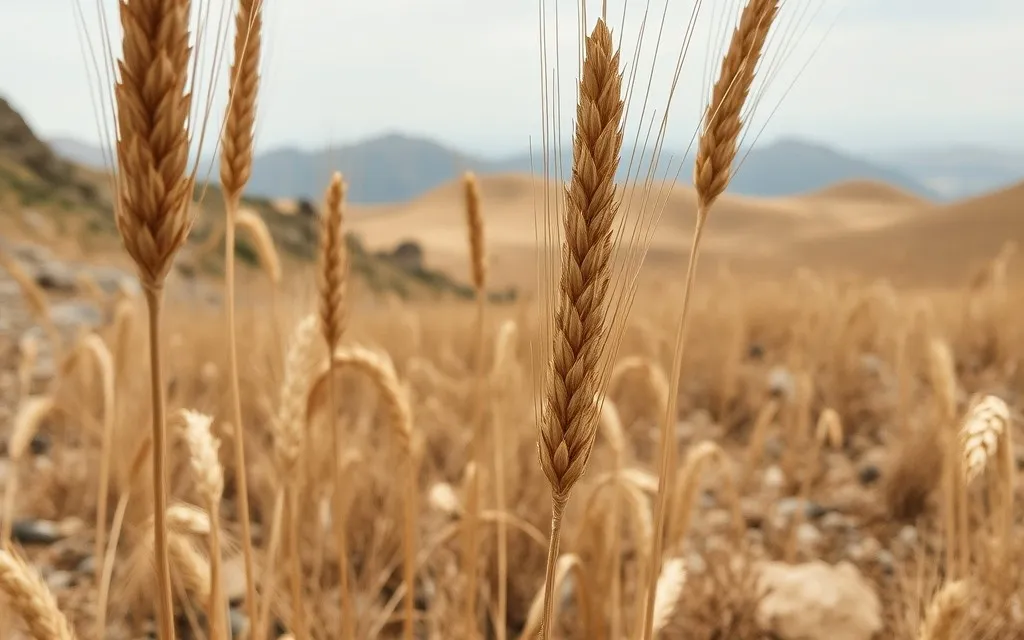
A sown field is a field you cannot walk away from. Once a household buried seed in prepared ground, it owed that ground attention through the whole growing season, from the first shoots to the last dry stalk. Wild stands could be visited when they ripened; a plot had to be watched, weeded and kept clear of grazing animals and birds until harvest. That obligation anchored a family to one place in a way gathering never did.
Grain also keeps, and keeping changes everything. A good harvest outlasts the weeks when it ripens, so surplus moves indoors, into pits, bins and sealed containers that have to be built, kept dry and defended. What can be stored can be counted, and what can be counted can be claimed, divided and argued over. Storage turns a seasonal windfall into property with an owner.
The crop imposes its own calendar. Sowing, harvesting, threshing and grinding arrive in sequence and return every year, and each step needs hands and kit: sickles with sheen on the blades, threshing surfaces, grinding stones worn smooth in the same hollow. Household routines bend around these tasks, and the toolkit records them.
The same field, sown from the same stock, becomes a heritable possession passed between generations. A lucky find is replaced by an inheritance, and with it come rules about who holds the seed and who may plant it.
Common misreadings of the Anatolian wheat story
A short summary will often tell you that wheat was domesticated in southeast Anatolia and leave it there, as if a single field on the Karacadag slopes supplied the world. Genetic work on einkorn points instead to more than one independent domestication, which makes Turkey a major centre rather than the only one. The crop's story has several beginnings, and the Anatolian one is simply among the best documented.
Even the Karacadag case is less settled than the map pin suggests. The genetic argument for a single southeast Turkish origin drew archaeobotanical objections, with researchers pointing to the plant remains themselves as evidence against one narrow birthplace. Readers who want to weigh the claim should look for the botanical record from excavated sites, not only the DNA.
Dates are the other frequent slip. A radiocarbon result for a settlement dates an occupation, not the wheat inside it. Çatalhöyük was lived in across many centuries, while the seeds that were sequenced are roughly 8,400 years old, so quoting the site's span as the age of its grain overstates the case.
Finally, domestication did not switch gathering off. For a long stretch, households planted domesticated emmer and still collected wild cereals, pulses and nuts alongside it. A site that yields domesticated grain may therefore also show gathered wild foods, and that mix is a sign of a gradual shift rather than a clean break with foraging.
Frequently Asked Questions
Is einkorn or emmer the older domesticated wheat in Turkey?
Einkorn is the older of the two, with the earliest archaeological evidence for domesticated einkorn appearing after about 8800 BC in southern Turkey at sites such as Çayönü and Cafer Höyük. Domestic emmer shows up later, with secure evidence from Çayönü dated roughly 8300–7600 BC, where scars on the spikelets indicated a hulled domestic variety.
Why did the Karacadag einkorn origin theory attract disagreement?
The Karacadag theory drew scepticism because it rested on genetic fingerprinting of modern einkorn samples rather than on ancient DNA from archaeological grains. The study, published in Science by researchers at the Agricultural University of Norway and the Max Planck Institute, traced einkorn to the Karacadag Mountains area of southeastern Turkey, but critics questioned whether modern gene-bank samples could reliably pinpoint a single origin.
Can you still see wild wheat relatives growing in southeastern Turkey today?
Wild wheat relatives do still occur in the region, and wild einkorn in particular comprises three distinct races, only one of which, native to Southeast Anatolia, was domesticated. That surviving wild population is why the area around the Karacadag Mountains has been treated as a plausible birthplace of cereal farming, though the genetic case remains debated.
Did Anatolian farmers grow bread wheat or only the ancient hulled kinds?
Anatolian farmers grew both. Analysis of roughly 8400-year-old seeds from Çatalhöyük found hexaploid wheat resembling modern species, including naked bread wheat (T. aestivum) alongside hulled spelt (T. spelta). That stock is the oldest wheat sample sequenced to date and the first ancient wheat sample from the Middle East.
For the full overview, see Neolithic agricultural shift.
Related in this series: Catalhoyuk archaeology, Gobekli Tepe history.