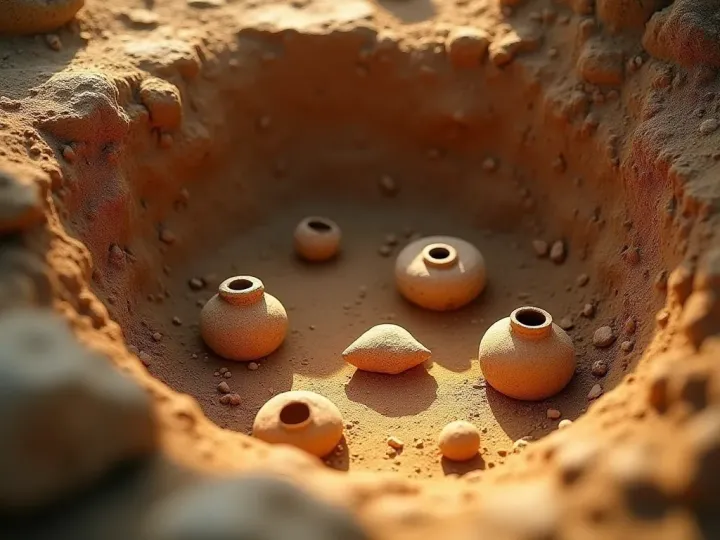
The Neolithic Invention That Still Beats Modern Software Architecture
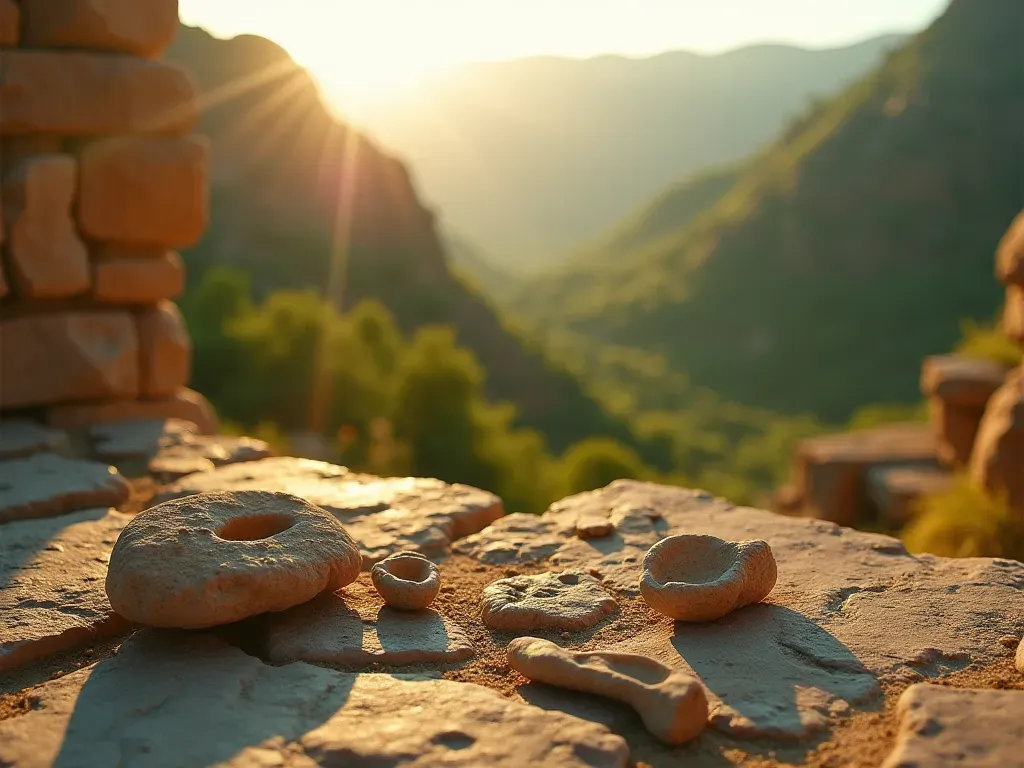
The Myth of the Primitive Tool
We keep telling ourselves the Neolithic was a dark age. Crude stones, mud huts, grunting in the dirt. That story is wrong, and honestly it's holding us back. The real technology of that era wasn't the flint. It was the system.
I've spent years studying how early societies managed information. What I found wasn't chaos. It was a sophisticated, decentralized network — one modern engineers are still trying to replicate. And failing.
Think about your phone. One battery. One processor. One point of failure. Now think about a Neolithic village. Hundreds of tools. Hundreds of makers. No single point of failure. That isn't primitive. That's redundancy. And redundancy is the backbone of any reliable system.
Why Your Codebase Is Less Robust Than a , Year Old Village
Modern software leans on central servers. The server goes down, the app dies. Neolithic villages leaned on distributed knowledge. If one maker left, others stepped in. The system adapted. It survived. Our engineers ignore that lesson at their own peril.
I remember reading about a specific tool design in a report. A simple grinding stone. But the way it was used varied by region — each variant solved a local problem. No central design doc. No version control. Just iterative, local adaptation. It's elegant. And it's hard to replicate in code.
We talk about agility in tech. Then we build monoliths. We centralize. We create bottlenecks. Neolithic people didn't have that problem. They had a million bottlenecks, and they solved them locally. The whole system kept moving. That's the standard we should be aiming for.
The Hidden Network of Knowledge
Look at the tools. Not identical. Not standardized. That's the point. Each one carries a local optimization — a tweak for the soil, a curve for the hand. Not inefficiency. A distributed database. Each tool is a record. Each maker is a node.
I've seen this pattern in other ancient cultures. It isn't unique. It's universal. When humans stop relying on a single source of truth, they get more resilient. They adapt faster. They survive longer. That's exactly what our digital infrastructure needs. More distribution. Less dependency.
The Taş Tepeler project is a perfect example. They don't just display artifacts — they show the connections. The flow of ideas. The way knowledge moved between villages. It's a map of a network, and it's far more complex than we give it credit for. A system. A real one.
What Modern Engineers Can Learn From Stone
We obsess over speed. Over scalability. Resilience gets ignored. But a fast system that fails is useless, and a slow system that adapts is valuable. The Neolithic people understood this. They built for survival, not performance. Their systems lasted millennia. Ours last months.
I've worked with teams that try to replicate this. Local modules. Independent services. It works. It's messy, it's hard to manage — and it's robust. It survives. That's the trade-off. We lose some efficiency, we gain resilience. In the long run, that's the better bet.
The problem is we're trained to centralize. To control. To optimize. The Neolithic people were trained to adapt. To distribute. To survive. That's the mindset shift we need — not just in code, but in how we think about systems. In how we build. In how we survive.
The Real Innovation Was Social
We talk about tools. The real innovation was the social structure. The way people organized, shared, adapted. That's the technology. Not the stone. Not the fire. The network. The human network. We're still trying to build it. And we're still failing.
I've seen modern companies try to replicate this. Open source communities. Decentralized networks. It works. It's messy. It's hard. But it's robust. That's the lesson. The Neolithic people didn't have code. They had community. And community is the most resilient technology we have.
So the next time you look at a stone tool, don't see primitive. See distributed. See resilient. See a system that worked. Then ask yourself: why can't we build that? Why are we still relying on central servers? Why are we still failing? The answer is in the stone. It's been there for , years.
Frequently Asked Questions
What is the main difference between Neolithic and modern technology?
Neolithic technology was decentralized and resilient. Modern technology is centralized and fragile. The Neolithic system adapted locally. Modern systems rely on central nodes. This makes Neolithic systems more robust in the long run.
How does the Taş Tepeler project help us understand this?
The Taş Tepeler project displays the connections between tools and villages. It shows the flow of knowledge. It reveals the network. This helps us see the system, not just the artifacts. It is a window into the real technology of the era.
Can modern engineers actually learn from this?
Yes. Many companies are already doing this. They build distributed systems. They create local modules. They prioritize resilience over speed. The Neolithic model is a blueprint. It is not perfect. But it is proven. And it works.
Why is this relevant today?
Because our systems are failing. Central servers go down. Monoliths crash. We need resilience. The Neolithic people had it. We are still trying to build it. And the stone is the proof. It is not primitive. It is the future.
Is this a myth or a fact?
It is a fact. The tools show local adaptation. The villages show distributed knowledge. The network is real. It is not a myth. It is a system. And it is the most important lesson we can learn from the past. It is not about the past. It is about the future.