Göbekli Tepe: Understanding the World's Oldest Temple Complex
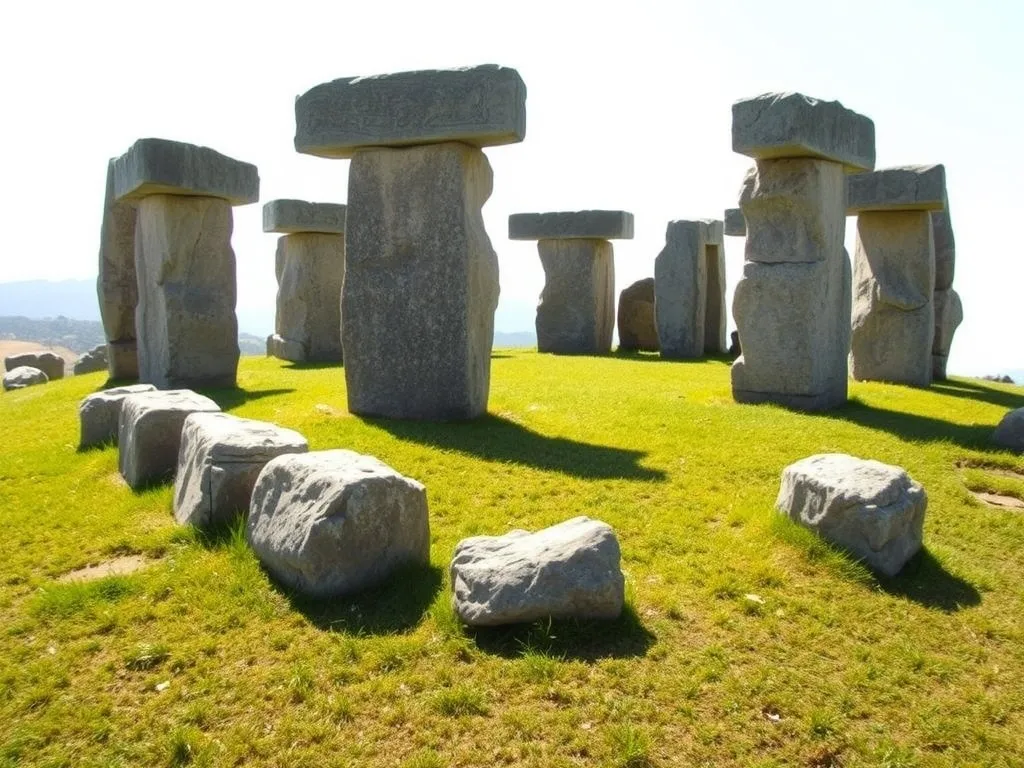
Göbekli Tepe is a hilltop complex of carved T-shaped stone pillars in southeastern Turkey, raised by hunter-gatherers around 9500 BCE and used for roughly 1,500 years before being deliberately buried around 8000 BCE. It was identified in 1963, excavated from 1994, and inscribed as a UNESCO World Heritage Site in 2018.
Physically, the site is a tell, meaning a mound built up over centuries by human activity rather than a natural hill. The tell at Göbekli Tepe stands 15 m high and covers 8 ha on a limestone ridge above the plain near Şanlıurfa, in southeastern Turkey close to the Syrian border.
The Turkish name Göbekli Tepe translates as "belly hill." It describes the rounded, swelling profile of the mound, not any ritual function; the label is a description of the landform, and no source ties it to the beliefs of the people who built the site.
What defines the place is not a building in the conventional sense but clusters of T-shaped limestone pillars, some weighing many tonnes, arranged inside circular enclosures. These monoliths were quarried, moved and carved, and several carry animal reliefs.
The timeline: built around 9500 BCE, buried around 8000 BCE
Construction of the monumental T-shaped pillars is dated to roughly 9500 BCE, which places them thousands of years before Stonehenge. That date comes from radiocarbon work on organic residues and the stratigraphy of the site, and it is one of the most secure dates in Neolithic archaeology. The builders were not experimenting with a new idea in an empty landscape; they were raising carved limestone monoliths at the very start of the Neolithic in southeastern Anatolia.
The site stayed in use for about 1,500 years. That span is what makes Göbekli Tepe a sequence rather than a single monument. Enclosures were modified, rebuilt and replaced over generations, so the visitor is looking at a palimpsest of activity, not one construction phase frozen in time.
Around 8000 BCE the enclosures were deliberately filled with sediment and debris. That backfilling is the reason so much of the carving survived intact: the pillars were sealed before weathering, later building or ploughing could reach them. Whether the fill was a ritual closure or simply a practical way to decommission the site remains an open question.
Radiocarbon dates divide the occupation into two clear phases. The great Layer III enclosures belong to the Pre-Pottery Neolithic A, roughly 9500–8800 BCE, while the smaller rectangular Layer II structures belong to the later PPN-B, roughly 8800–8000 BCE. The site was then abandoned around 8000 BCE, and the chronology of the shift from circular to rectangular architecture is one of the more reliable things the excavation has established.
Why hunter-gatherers building monuments changed the story of civilisation
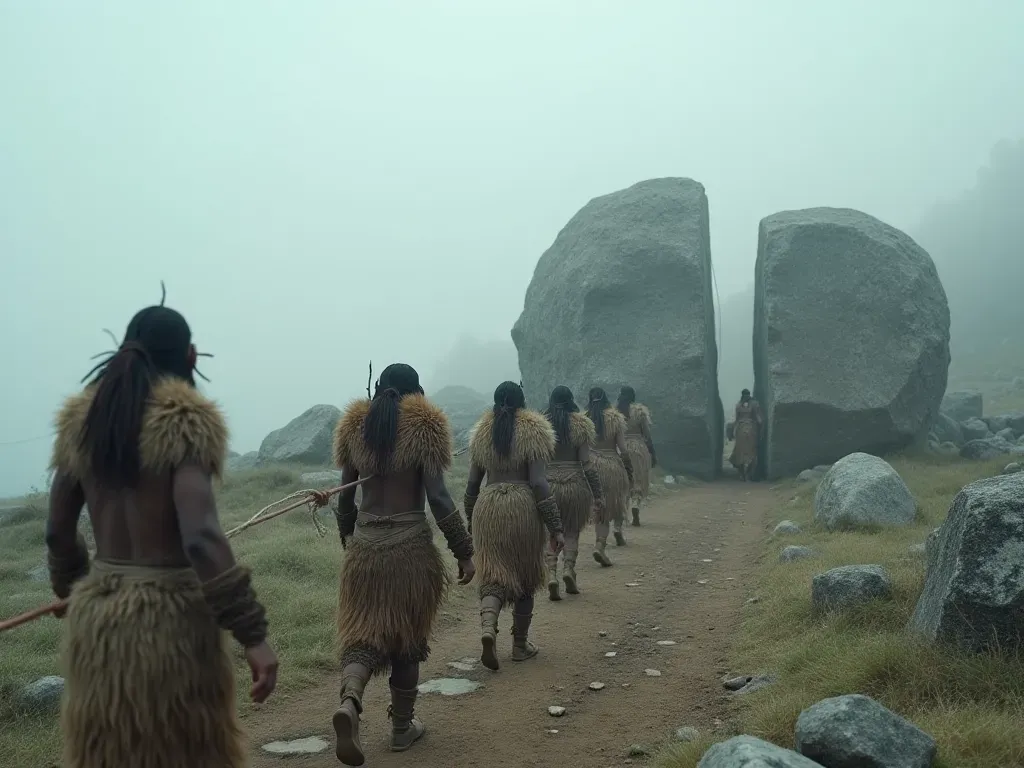
The old model ran in one direction. People learned to farm, settled into villages, produced a surplus, and only then had the time and stability to build shrines and carve images. Göbekli Tepe puts the monument before the village. Its builders were Pre-Pottery Neolithic groups with no pottery and only the first stirrings of cultivation, yet they could quarry, carve and raise the T-shaped pillars around 9500 BCE, centuries before the farming economies that supposedly made such work possible.
That reversal matters because it moves organised belief to the front of the story rather than the back. If large numbers of people could gather, feed themselves and coordinate heavy labour without a settled agricultural base, then shared ritual may have driven the gathering rather than followed it. The site does not prove religion invented farming, but it removes the assumption that farming had to come first.
The carvings reinforce the point. Pillars carry foxes, snakes, boars, cranes, scorpions and human figures, cut with a confidence that implies a long visual tradition behind them. These are not idle decoration; researchers interpret the animal reliefs as a shared symbolic repertoire among the people who met here, whatever the meeting was for—though this is inference, not established fact.
What the pillars cannot tell us is why they were raised.
Sanctuary, seasonal gathering place, territorial marker, or all three at once: the evidence supports each reading without settling any of them. That question stays open, and honest accounts of the site should say so rather than close it.
How the site was found, lost, and found again
The mound was not unknown. In 1963, a joint Istanbul–Chicago survey team identified the mound but dismissed it as a medieval cemetery, and the broken limestone slabs lying on the surface were filed away as grave markers. The site was discovered in 1963 and then effectively forgotten for three decades, which is why the popular story of a dramatic discovery is misleading. Nobody was looking for a temple.
Klaus Schmidt began systematic excavation at Göbekli Tepe in 1994, working from the German Archaeological Institute, and the first carved pillars came out of the ground quickly. Excavations have run from 1994 to the present, with only seasonal pauses, and the project has outlived Schmidt himself, who died in 2014. His reading of the site as a ritual centre, built by hunter-gatherers for gathering rather than dwelling, shaped two decades of public understanding and still frames most coverage.
The digging itself is slow and deliberately partial. Most of the tell remains unopened, several enclosures are still buried by choice, and backfill protects the megaliths between seasons. Each season revises the picture, so any account written more than a few years ago is already out of date. For comparison with a later, fully settled site, see Çatalhöyük and the first urban settlement.
From local curiosity to UNESCO World Heritage in 2018
Göbekli Tepe entered the World Heritage List in 2018, at the 42nd session of the World Heritage Committee, under reference 1572 and criteria (i), (ii) and (iv). Read those criteria closely and the logic of the inscription becomes clear. They recognise the site as a work of creative genius, as evidence of an interchange of ideas across the region, and as an outstanding example of a type of structure — the monumental enclosure.
What the listing changed is mostly practical. Inscription carries conservation obligations, so the excavated enclosures, the exposed limestone pillars and the surrounding landscape are now managed under a formal protection regime rather than as a single archaeological dig. Visitor infrastructure followed: walkways, a shelter over the main enclosure and a reception area that keeps the crowd off the stones.
Attention rose sharply, and the site became the anchor of Taş Tepeler, a project that promotes the wider region's Neolithic heritage and links Göbekli Tepe to neighbouring excavations of similar age. For a visitor, that means the site is no longer an isolated curiosity but the centre of a mapped landscape. For a reader, it means the protection is now formal, and the interpretation is still being argued over.
What to look for when you visit, and what not to expect
The four main enclosures sit under a protective roof, but the pillars have largely been left where they were found. What you walk around is the original arrangement of stone, not a rebuilt version. That matters: the rings are incomplete, some pillars are broken, and the gaps are part of the evidence rather than a failure of presentation.
Look at the surfaces before you read anything on a panel. The carved animals are the site's real vocabulary: foxes, boars, snakes, cranes, scorpions, worked into the broad faces of the T-shaped pillars. A relief of a fox or a boar rewards a few minutes of quiet looking more than any label does.
Göbekli Tepe sits a short drive from Şanlıurfa, which makes it easy to pair with the city's museum, where the larger finds are displayed, and with the wider Taş Tepeler circuit of neighbouring sites. The same logic applies as in a month of labor for one shirt: the object on display is only half the story.
Do not arrive expecting a finished monument. You will see open excavation, scaffolding, exposed trenches and areas fenced off while work continues. The unanswered questions are visible in the ground itself, which is precisely what makes the visit worth the detour.
The open questions that keep Göbekli Tepe in the news
Nobody knows how many people built the enclosures, where they came from, or whether they worked year after year or gathered for a season and dispersed. The carved pillars demand skill; the volume of stone demands labour. Whether that workforce lived on the hill, arrived from neighbouring settlements, or drew on a region-wide network is a question the trenches have not settled.
The enclosures themselves are equally ambiguous. Some researchers reconstruct them as roofed structures, others as open-air sanctuaries, and the evidence supports neither conclusively. That single uncertainty changes how you read every model of what the place was for.
The deliberate burial of the enclosures is not in dispute; the motive is. Decommissioning, concealment and simple backfilling all remain on the table, and each implies a different relationship between the builders and the site.
Treat sweeping claims with caution. Göbekli Tepe overturns one assumption, about sequence, extremely well: monumentality before farming. It does not rewrite everything else about prehistory, whatever the next headline says.
Frequently Asked Questions
Is Göbekli Tepe older than Stonehenge and the Egyptian pyramids?
Yes, Göbekli Tepe is far older than both Stonehenge and the Egyptian pyramids. It was built around 9500 BCE, while Stonehenge and the pyramids came thousands of years later. Its T-shaped pillars were quarried, carved, and erected at that early date, making it the world's oldest known temple complex.
Why was Göbekli Tepe deliberately buried?
Nobody knows for certain why Göbekli Tepe was deliberately buried. The site was used for roughly 1,500 years before being covered under tonnes of sediment around 8000 BCE. Whether this was an act of ritual closure, protection, or something else remains one of the open questions that keep the site in the news.
Can you visit Göbekli Tepe, and how far is it from Şanlıurfa?
Yes, Göbekli Tepe is open to visitors and lies just outside Şanlıurfa in southeastern Turkey. It became a UNESCO World Heritage Site in 2018, which raised its profile as a destination. The article's visiting section covers what to look for and what not to expect on site.
What is the Taş Tepeler project and how does Göbekli Tepe fit into it?
The Taş Tepeler project is a wider regional research programme covering several prehistoric sites in the area around Şanlıurfa. Göbekli Tepe sits within this landscape of early monumental sites, and the article's open questions section addresses how it relates to its neighbours. The project has helped keep the site in the news.
For the full overview, see Neolithic era developments.
Related in this series: Catalhoyuk archaeology.