The prehistoric trick that made rock paintings scream with sound
The Sound That Was Missing From History Books
We tend to picture prehistoric art as something silent and frozen. Dim caves. Static rock faces. Faded ochre lines. But what if that silence is the biggest lie we've ever told ourselves? A recent study from the University of Helsinki suggests our ancestors didn't just see these images — they heard them roar back.
That's not a minor detail. It's a fundamental shift in how we understand human perception. Riitta Rainio and her team measured acoustic impulse responses at thirty-seven specific sites across Finland's Lake District. What they found: these cliffs act like massive, natural speakers.
The implications are staggering. For thousands of years, these locations were likely vibrant arenas where sound and vision merged into a single sensory event. The paintings weren't decorations. They were part of an immersive audio-visual loop that felt alive to the people standing on those frozen lakes.

How the Cliff Became a Speaker
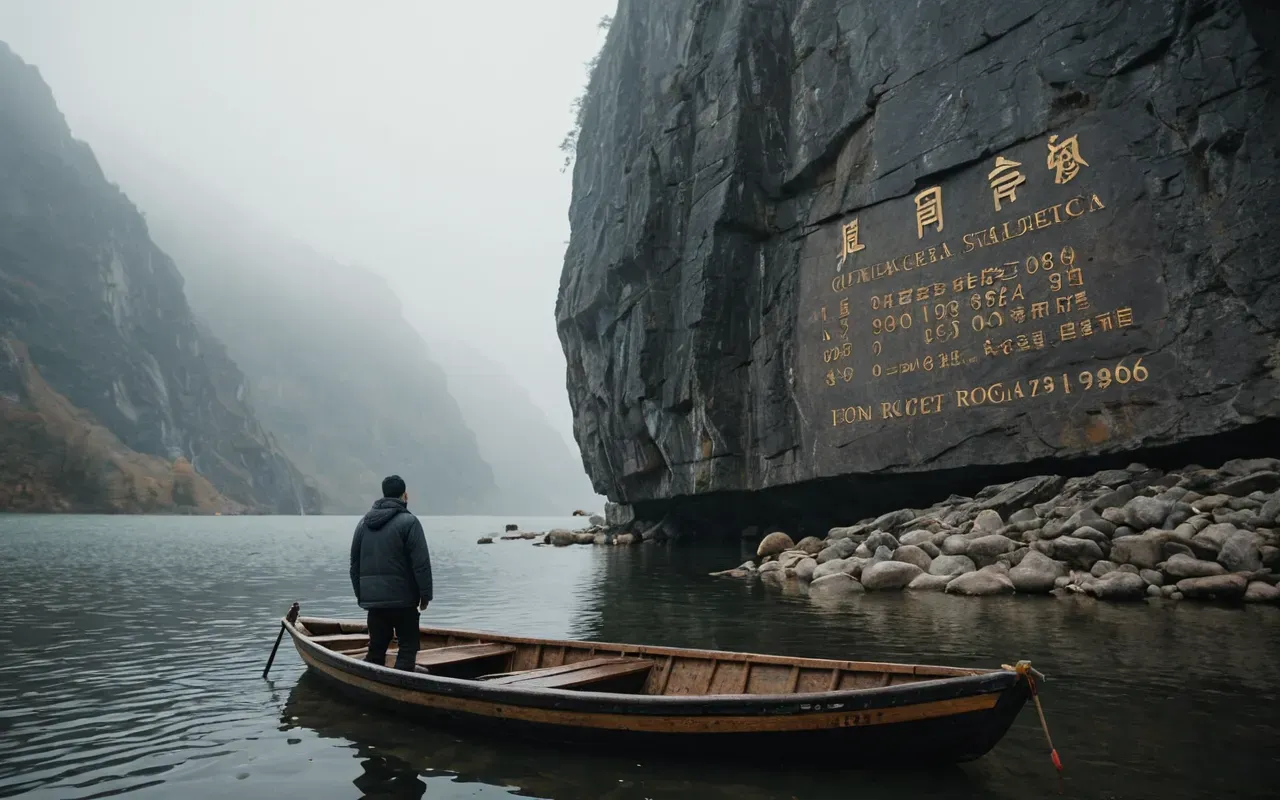
The physics here are surprisingly simple. Smooth rock surfaces reflect sound waves with incredible clarity. When someone on a boat makes a noise, the flat cliff face bounces it back as a distinct echo. Researchers call this an auditory mirror image.
It's not a vague reverberation, either. The echoes are sharp and repeat the original sound accurately. A drumbeat returns as a drumbeat. A shout comes back as a clear, distinct voice from behind the stone wall.
And this phenomenon is unique to these painted sites. Nearby jagged cliffs produce muddy, weak sounds that lack definition. The smoothness of the artist's canvas was likely chosen specifically for this acoustic quality. Not an accident — a design choice.
The Method Behind the Magic
To capture this data, Rainio's team used a custom-designed recording raft. They approached the cliffs from the water to simulate how hunter-gatherers would have experienced these sites in summer.
In winter, they ventured onto the frozen lake surface. This allowed them to measure sound propagation under different atmospheric conditions. The consistency of results across seasons proves the effect is robust and reliable.
They used impulse response methods to map the echo zones. This technique analyzes how sound decays over time in a specific space. The data revealed that the painted surfaces create stronger reflections than any other nearby geological feature.

Why This Changes Our View of Neolithic Life
We often assume ancient people lived in a world devoid of complexity. We project our modern senses onto their reality and miss the full spectrum of experience. This study shatters that assumption by showing how deeply integrated sound was into their daily rituals.
The paintings depict drummers and boats. These aren't just random symbols; they are instructions for an event. The site was likely a stage where the environment itself participated in the performance.
This connects to broader shifts in how we see Neolithic technology. It wasn't just about farming tools or pottery. It was about manipulating the environment for sensory impact.
If you are interested in how ancient people solved complex problems with simple materials, the Neolithic technology that outperformed modern engineering standards offers a fascinating parallel. It shows a level of ingenuity we rarely credit to early societies.
The Shamanistic Angle Nobody Talks About
Rainio suggests these sites were sacred seats of ritual. In cultures where shamanism played a central role, controlling the environment was key to spiritual power.
Imagine standing in a boat and hearing your voice return to you from the spirit world behind the rock. That is not just an acoustic effect; it is a theological event.
The researchers believe the ability to communicate reciprocally with physical reality was a major draw. The cliffs were active agents in their cosmology.
This perspective aligns with recent findings about social structures in early villages. If you want to understand how complex these societies were, the debate over who was allowed to leave Neolithic villages provides crucial context on social boundaries and mobility.
The Human Element Behind the Data
What strikes me most is how specific this research was. They didn't just guess; they measured. They recorded archaic vocal techniques and reconstructed possible prehistoric languages to test the echo effect.
Julia Shpinitskaya noted that the cliffs were energetic and active agents. This language moves us away from static museum displays and into a living world.
The team created videos to make the acoustic characteristics perceptible to the public. This is a brilliant way to bridge the gap between scientific data and human empathy.
It reminds us that archaeology is not just about digging up objects. It is about reconstructing experiences.
What This Means for How We Teach History
Educators need to update their materials. The Neolithic era was not a slow, dull period of survival; it was a dynamic time of sensory innovation.
We should be teaching students to think about sound, space, and perception as core elements of culture.
This discovery adds another layer to our understanding of ancient ingenuity. It suggests that early humans were sophisticated engineers of their own experiences.
If you are curious about how we often misinterpret ancient social dynamics, the story of the 11,000-year-old man riding a leopard shows just how wrong our assumptions can be.
The Broader Implications for Archaeology
This study opens the door to other acoustic archaeologies. Imagine analyzing ancient theaters or temples with this same level of rigor.
It challenges us to look beyond the visual. Sound is an invisible artifact that leaves no physical trace but a profound impact.
We are only beginning to scratch the surface of how prehistoric people manipulated their environments for spiritual and social purposes.
The Final Echo of an Ancient World
So the next time you look at a rock painting, remember the silence is a modern invention. The original audience heard their world reflected back to them in sound.
It is a powerful reminder that history is not just what we see. It is what we hear, feel, and experience in the spaces around us.
This research from Finland is a small but significant piece of the puzzle. It shows that even in the Neolithic era, human creativity knew no bounds.
And it invites us to listen more closely to the past. The echoes may be faint now, but they are still there if we know how to find them.