Daily Life in Çatalhöyük: Housing, Art, and Social Structure
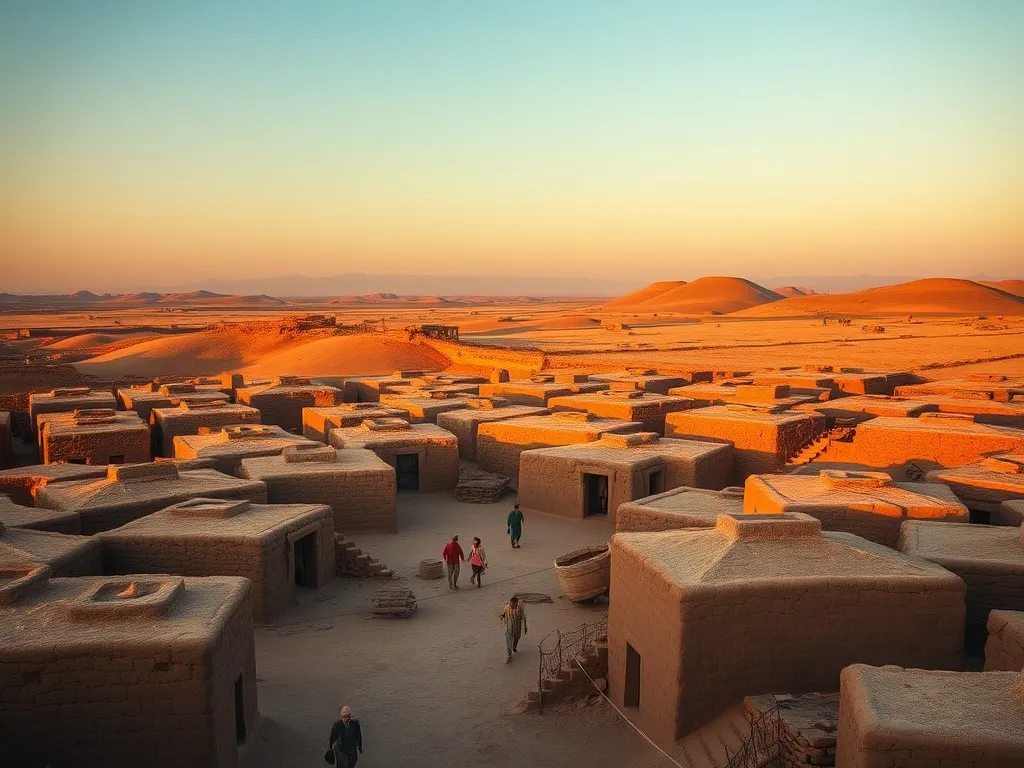
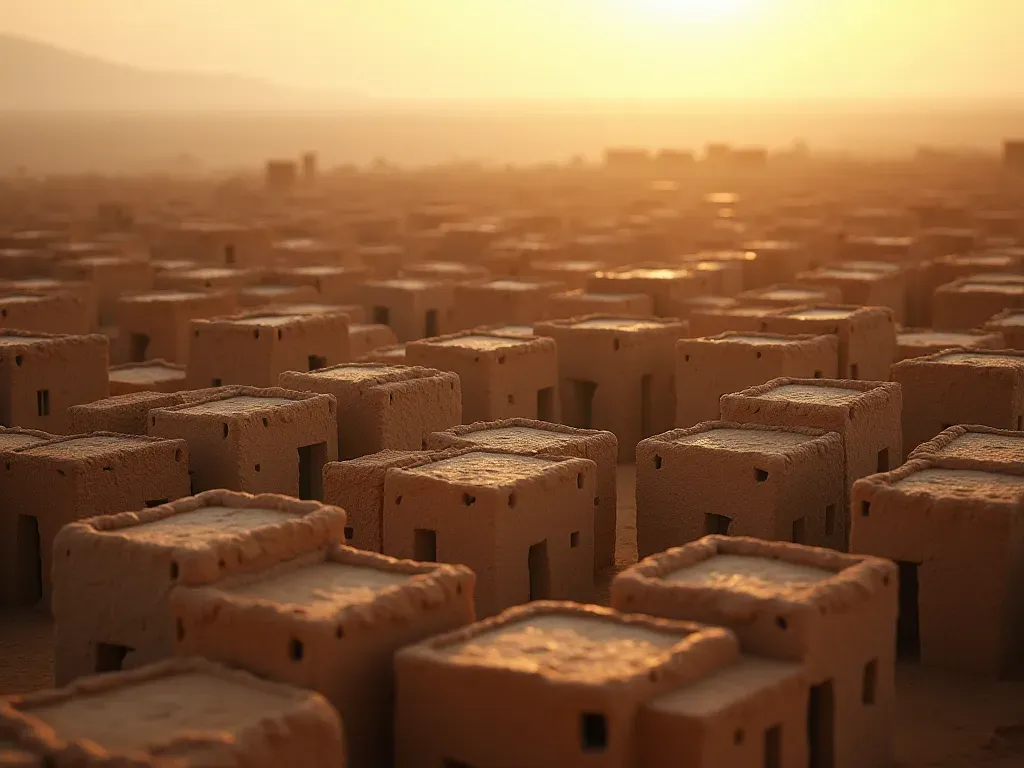
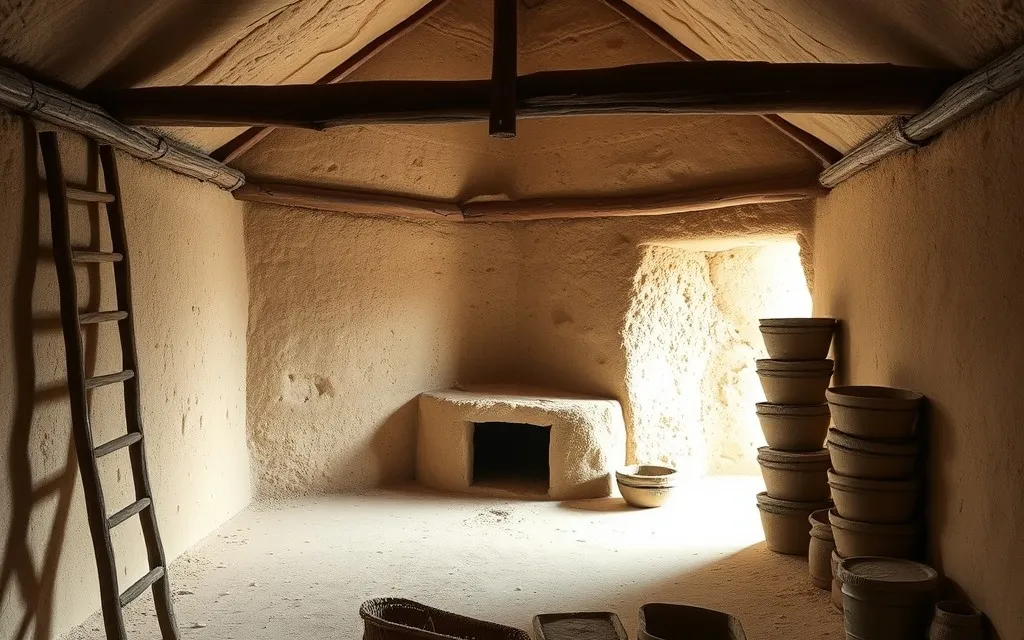
Daily life at Çatalhöyük was domestic and dense. People entered one-room mudbrick houses through openings in the roof, climbed ladders to get home, and moved across the settlement largely over the rooftops rather than along streets. Inside, they cooked, slept, stored food, made tools and buried their dead in the same cramped space. Men and women ate largely the same foods, and the day's work happened within a few steps of the hearth.
At its peak, between roughly 7100 and 5700 B.C., the settlement held around 8,000 inhabitants in tightly packed one-room houses without doors or windows, entered through small roof openings. Larsen and colleagues estimate this peak population at around 8,000. The result was a dense, inward-facing settlement in which daily life unfolded largely on the rooftops.
Inside, one room did the work of several. A raised platform served as sleeping and sitting space, storage bins held grain, and an oven and hearth sat against one wall. Burial took place under the floors, so the dead stayed in the household. Rebuilding on the same footprint was routine, which is why excavators find stacked layers of houses rather than lanes and alleys. Older guidebook descriptions that talk about streets at Çatalhöyük are out of date.
What people ate, and why skeletons show men and women sharing the same table
Bones settle the question of who ate what. Analysis of human skeletons from the site shows that men and women had generally identical diets, a finding that undercuts the familiar image of sharply separated male and female lives, with meat for one group and plants for the other. Whatever divisions existed in work or status, the table was shared.
The menu itself was broad rather than monotonous. People ate animal products including fish and beef alongside plants such as barley and wheat, a mix that drew on herding, hunting, fishing and cultivation together. The shift to farming wheat and barley did not narrow the diet so much as add a reliable staple to it.
Storage shows how carefully plant food was handled before it reached the oven. In her 1996 botanical report, Christine Hastorf described a bin in the North Area holding a dense layer of charred lentils with very little chaff or other plant material mixed in. That near-clean pulse layer points to grain and legumes that had already been processed, cleaned and set aside inside the house, not rough harvest dumped straight from the field.
Tools, textiles and crafts: what was made inside the settlement
Production at Çatalhöyük was household-scale and constant. People knapped obsidian into blades and worked bone into points and handles, threw and hand-built ceramics, and pressed clay into figurines and beads. The raw materials rarely came from the immediate plain, which means the workshop and the trade route were part of the same routine.
Obsidian arrived from Cappadocia and from sources in Eastern Turkey, so every sharp edge in a house implies a supply line running hundreds of kilometres. Some traders travelled as far as the Red Sea to obtain baskets and shells. That is worth holding onto when a guidebook describes the settlement as self-sufficient: the everyday toolkit depended on movement across Anatolia and beyond.
Textiles: the flax story has changed
Older descriptions of Çatalhöyük weaving routinely call the fibres flax. Microscopic analysis published by Rast-Eicher, Karg and Bender Jørgensen in 2021 identified oak bast instead, so the flax label in many older guidebook descriptions is now out of date. The fragments themselves come from the East Mound's middle phase, roughly 6,700 to 6,500 BCE, and include woven burial textiles as well as cordage.
The cloth wrapped around the dead was woven from oak bast, not flax, and the correction came from looking at the fibres under a microscope rather than at the labels in older reports.
Craft work, in other words, ran through the whole house: stone, bone, clay and plant fibre, fed by routes that stretched from central Anatolia to the Red Sea coast. What looks like a village industry was a network.
Death under the floor: burial as part of household life
Walk across the floor of a Çatalhöyük house and you are walking over the family dead. Burials sat beneath the platforms and floors of living rooms, usually with the body tightly flexed and bound, laid in a simple pit with few or no grave goods. The grave was not a separate place you visited; it was part of the room where people slept, cooked and worked.
Who was placed with whom turns out to have changed over time. A 2025 ancient-DNA study by Yüncü and colleagues, drawing on 131 ancient genomes, found that people buried together in the settlement's early phases were frequently close genetic relatives. In later phases, the same shared graves often held people who were unrelated to one another.
That shift matters because it undercuts the older guidebook picture of an unchanging house society in which kin groups simply accumulated their ancestors under the same patch of floor for centuries. If later households buried non-relatives together, then co-residence and burial were being organised on some basis other than blood, whether through marriage, adoption, migration or something else entirely.
The genetic work rests on ordinary physical evidence as well. Researchers have used dental remains from 266 individuals to reconstruct how people were related, reading the teeth alongside the genomes rather than relying on grave position alone. The dead, in other words, are still telling us who lived with whom — much as at the temple complex at Göbekli Tepe, where carved stones raise similar questions about who gathered and why.
Figurines, art and what the numbers now say about gender and belief
The famous seated woman with her hands on feline armrests has carried an outsized burden. She is the image most popular accounts use to argue that Çatalhöyük was a society organised around one great mother goddess, with female divinity at its centre and everything else arranged beneath her. The figurine corpus does not support that tidy story.
Recent reinterpretations of the data suggest that male and animal figurines were just as common as female figurines, if not more so. That single observation undercuts the older reading of a settlement devoted to a dominant female deity. A household that carved a bear, a leopard or a bearded man was not necessarily placing a goddess at the top of a hierarchy; it was working with a repertoire of figures, each doing a different job.
Just as telling is where the art sits. Figurines, wall paintings, plaster reliefs and modelled animal heads turn up inside ordinary houses, in the same rooms where people cooked and slept. There is no separate monumental building at Çatalhöyük where the symbolism was kept apart from daily life. Belief, in this settlement, was something you lived beside rather than travelled to.
How big was Çatalhöyük, and how did thousands of people live without streets?
Scale is where older descriptions of Çatalhöyük go soft. The East Mound, the part most visitors see, is dated in recent studies by Larsen and colleagues and by Yüncü and colleagues to roughly 7,100 to 5,950 BCE. The settlement itself was founded earlier, around 7500 BCE, and grew to cover about 32 acres.
Population estimates for that footprint run from 3,000 to 8,000 people. The question is what that density meant in practice: how much space people shared, and how they organized it.
That density raises the obvious question of how thousands of households managed shared space without any public thoroughfare. The answer lies in the rooftops and in the open areas between clusters of buildings, which served for work, rubbish and gathering. It is a reminder that a settlement can be enormous and still organise itself around the house rather than the street, a pattern visible in other Neolithic communities of the period, including the one behind this Danish skeleton from the Neolithic.
Planning a visit: what to see and what the site cannot show you
Çatalhöyük sits roughly 668 kilometres southeast of Istanbul, which makes it a destination in its own right rather than an afternoon out from the city. Plan it as part of a wider swing through the Konya plain, and treat the journey as the price of seeing one of the world's earliest town-sized settlements.
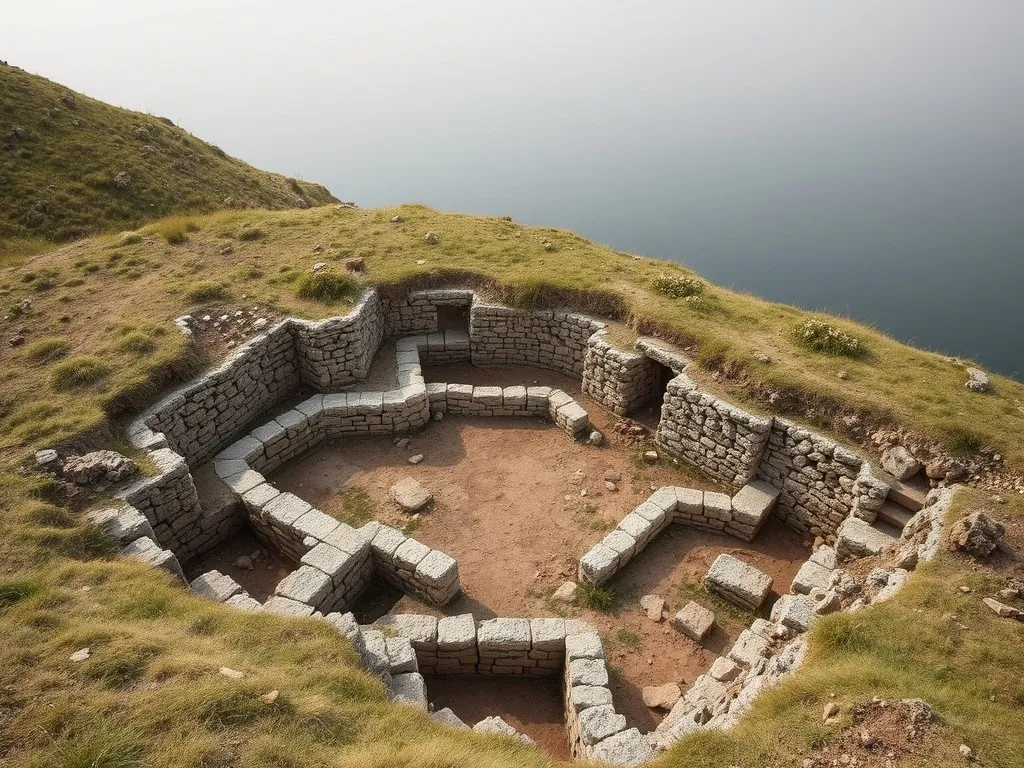
What you will not find is a standing town. Two mounds rise from the plain, and the mudbrick walls that survive are low, eroded and protected under shelters. Almost everything vivid you have read about daily life — the roof entries, the ovens tucked against walls, the platforms where people slept — comes from excavation reports and from reconstructed houses, not from architecture you can walk through on site.
Expect to lean on museum displays and interpretive panels to picture what has vanished. The burials under the floors and the fittings of individual rooms are largely reburied or removed, so the reconstructed interiors nearby do much of the explanatory work. Go for the landscape, the scale and the context; accept that the detail lives in the finds, not in the ruins.
Frequently Asked Questions
Did people at Çatalhöyük really have no doors, and how did they get in and out in bad weather?
Most houses had no ground-level front door, so people entered through an opening in the roof using ladders. This design kept the interior sheltered and made the roof the main working and circulation space, meaning daily movement continued above the rooms even in wet or cold weather.
Were men and women treated differently at Çatalhöyük?
Skeletal analysis shows men and women had generally identical diets, suggesting they shared the same table rather than eating separately. Burial and figurine evidence is more ambiguous, and recent reinterpretations find male and animal figurines just as common as female ones, so simple gender hierarchies are hard to support.
What did the 2025 DNA study change about how we understand Çatalhöyük families?
The 2025 ancient-DNA study, drawing on 131 genomes, found that people buried together in early phases were often close genetic relatives, while in later phases they were frequently unrelated. This suggests household burial groups shifted over time from kin-based to more socially assembled communities.
Is Çatalhöyük worth visiting, and what can you actually see there today?
It is worth visiting for the reconstructed houses and the scale of the mound, though the site cannot show you the original roofs, textiles or burials as they were. Çatalhöyük lies 668 kilometers southeast of Istanbul, and the on-site displays help interpret what excavation has revealed.
For the full overview, see Neolithic urban living.
Related in this series: Catalhoyuk archaeology, Gobekli Tepe history.